
Intelligent Octopus Flux not letting battery discharge in the evening

18 comments started 2024-04-09 last 2024-04-12
GivEnergy ProductsBattery
P
#1 Pips

We moved to IOF this week. I've noticed that when the battery has stopped discharging to the grid at peak times, we're left with 20% left in the battery, but for some reason, the house doesn't use the battery, it draws from the grid. We've reset the settings in the app, which allowed the 20% left in the battery to be used, but the next day the same thing happened, the battery just sat at 20% again. I'd rather not have to reset the settings every day.

I asked Octopus what I needed to do and they said:

"The minimum charge level is actually set by the user. While smart charging is enabled, we will not let the charge level go lower than the minimum set by the user. This ensures that there is always enough charge left for the user's needs.

If you would like to use that last 20% of charge yourself, you will need to disable smart charging. This will give you full control over the charging process."

I don't know what they mean. I looked at our settings, which say the minimum level the battery can reach is 4%. If we disable smart charging, does that mean Octopus won't be able to manage the battery as per IOF?

Can anyone let me know what settings I need to change, please? Our inverter model is GIV-HY3.6 and our software version is D0.912-A0.912.

D
#2 DD

Pips This may sound impertinent, but... does it matter ? IOF is effectively letting you treat the grid as an infinite, lossless battery. (So the grid is better than your battery, outside of peak hours.)

If you use what's in your battery, you'll have to replace it at some point. That's either from the grid, and IOF doesn't offer a cheap-rate period, or from solar. But you get to export your solar for the same price as importing. So it's better to export it directly, then to let it pass through your battery. So, unless I'm mistaken, you're better off using the grid instead of your battery, strange as it seems. (But I'm more than happy to be shown where I've got this wrong.)

it is of course very different if they stop using the battery during the peak, and make you import.

I think I read somewhere that IOF tends not to let the battery go below 20% - in case of power cuts, for example.

https://octopus.energy/intelligent-flux-faqs/

Are there limits to how low the battery will go?

Currently (11th October 2023), all batteries controlled through Intelligent Octopus Flux are set to a minimum of 20%. This may vary throughout the year.

T
#3 TX200

If you're using the grid between 4-7pm it does matter a bit - as it's peak rate.

Ideally octopus would put the battery into eco mode if they don't want to export during some of the peak time.

Mine stops around 20% too. I'm not aware of a 20% limit being set in my settings. I'm not sure where I'd change that, certainly not set on my side of the system!

I thought they might leave a bit of headroom in the battery in case of a power cut. Useful if EPS is enabled and wired up.

After 7pm, then defo use the grid. Save the battery for the next peak period.

H
#4 hamilton

Why do you want the last 20% from your battery? Your wanting to use the 20p per kwh energy and 20% round trip losses and (24p for example) then let it fill up either solar which will be sold anyways or replace it with 20p + losses the next day making it even more expensive.

Just treat it as like the national grid is your battery, I'm getting an EV and thinking of staying on it for the summer as intelligent flux means i have 21 hours off-peak

G
#5 geoffreycoan

I agree that outside peak times you wouldn’t want to draw from the battery, due to the conversion losses it’d be cheaper to import directly from the grid.

But @Pips said that “when the battery has stopped discharging to the grid at peak times, we're left with 20% left in the battery, but for some reason, the house doesn't use the battery, it draws from the grid”

If this drawing from the grid occurs in peak times then yes, its a problem, Octopus should put the battery into Eco mode so the user can use it rather than incur peak rate grid draw (at the same rate they’ve just exported at)

#7 THALL

You gave control to Octopus. Smart charge means they are control when your system discharges and when it charges. I bet 20% is their minimum discharge to grid setting. It should change back to dynamic after the peak period.

Load the octopus app, click devices at the bottom, slide the slider off to smart charge.

BTW you were lucky to get onto IO Flux. A lot of us can't. Issues with dual inverters etc.

D
#8 DD

THALL Load the octopus app, click devices at the bottom, slide the slider off to smart charge.

Does that change your tariff, or do they allow you to stay with the IOF pricing even without letting them control the inverter ?

(I'm on IOG, and I can similarly turn off smart charging. I would get to keep the same cheap 6-hour overnight rate - at least in the short term - but obviously wouldn't get any bonus slots. But the tariff is a brilliant deal even without the latter. I have heard that you're supposed to do at least one smart per 6 weeks on IOG, but that's hardly difficult to achieve.)

#9 THALL

It shouldn't. I was told for IOG you should use smart charge every once a month to stay on the tariff, but to be honest I doubt octopus really care if you use smart charge or not.

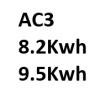
I would go on IOF if 1 I didn't have 2 ac3 inverters (I have tried joining) and 2 if my son wasn't now getting an electric car too. Normal flux doesn't make sense with IOG and Fixed export.

T
#10 TX200

THALL slight correction, it goes to eco paused (not dynamic, aka eco) at the end of the peak period.

As once it's off peak, there's no point using the battery (efficiency losses etc).

P
#11 Pips

Thanks everyone for replying. I hadn't really thought about the losses incurred using the battery to power the house. I just thought if the battery has charged from excess solar, why not let the house use it, as it was "free."

I see what you mean about exporting straight to the grid without the use of the battery and it being more efficient.

We were on standard flux last year and we wanted to use as little from the grid as possible. We heard about IOF and saw the higher rates so thought that would be best for us. Trying to get our heads round octopus managing the battery is just taking us a while to get used to.

H
#12 hamilton

DD Not cheap but very convenient over the summer, Having 1MW excess export during the summer and not much mileage will be fine for me but moving into the winter it will be moved to an EV tariff. It's less than 180 days away

#13 THALL

Pips I would guess providing you use the smart option once a month you can set a many discharge at other times to maximise the gains. If you have a single battery maybe set it up to export to grid for the last hour of peak period. That was my plan when I first looked at that tariff. It is the only good money maker at the moment but with prices expected to drop again it could all change.

D
#14 DD

THALL I doubt octopus really care if you use smart charge or not.

If not, why is IOG so much cheaper than standard Go? (It used to frustrated me, before I qualified for IOG, that people would turn off smart charging and just get a better Go that I was allowed to have, if they weren't having to give anything back to Octopus in return.)

Maybe Octopus get some leverage over prices by being able to say that they have control of x kWh of usage overnight, even if they don't actually exercise it?

G
#15 geoffreycoan

DD I would imagine that most people on IOG or IOF plug it in and let Octopus do their stuff.

As a community we are probably not a representative sample, we’re the “enthusiasts” and “home energy fiddlers”

#16 PianSom

THALL It shouldn't. I was told for IOG you should use smart charge every once a month to stay on the tariff, but to be honest I doubt octopus really care if you use smart charge or not.

I signed up to IOG in December, and turned off Smart Charging straight away. I've never used it. No-one has yet to me I have to.

#17 ProximusAl

PianSom Exactly what I did too.

#18 THALL

PianSom Upon checking I can not find anything in writing that says you need to turn it on, though I recall very clearly being told over the phone when I first joined an IO tariff I had to occasional use a smart charge. However, if this was ever really a thing I would expect it would be one of those tiny never enforced policies. Of course the other catch of not using smart charge is no extra cheap time slots. I have had some days with over 12 hours at the 7.5p rate so its not a bad thing to leave on :-)

I do wonder if a later version of IOF will allow for battery charging when the grid is free or even negative price to dump back when demand is higher. Octopus could easily offer that, virtual power plants.