Issues with secondary battery staying at 100% after BMS over voltage

76 comments started 2024-05-06 last 2025-02-07
GivEnergy ProductsHybridBattery
O
#1 Ortwin

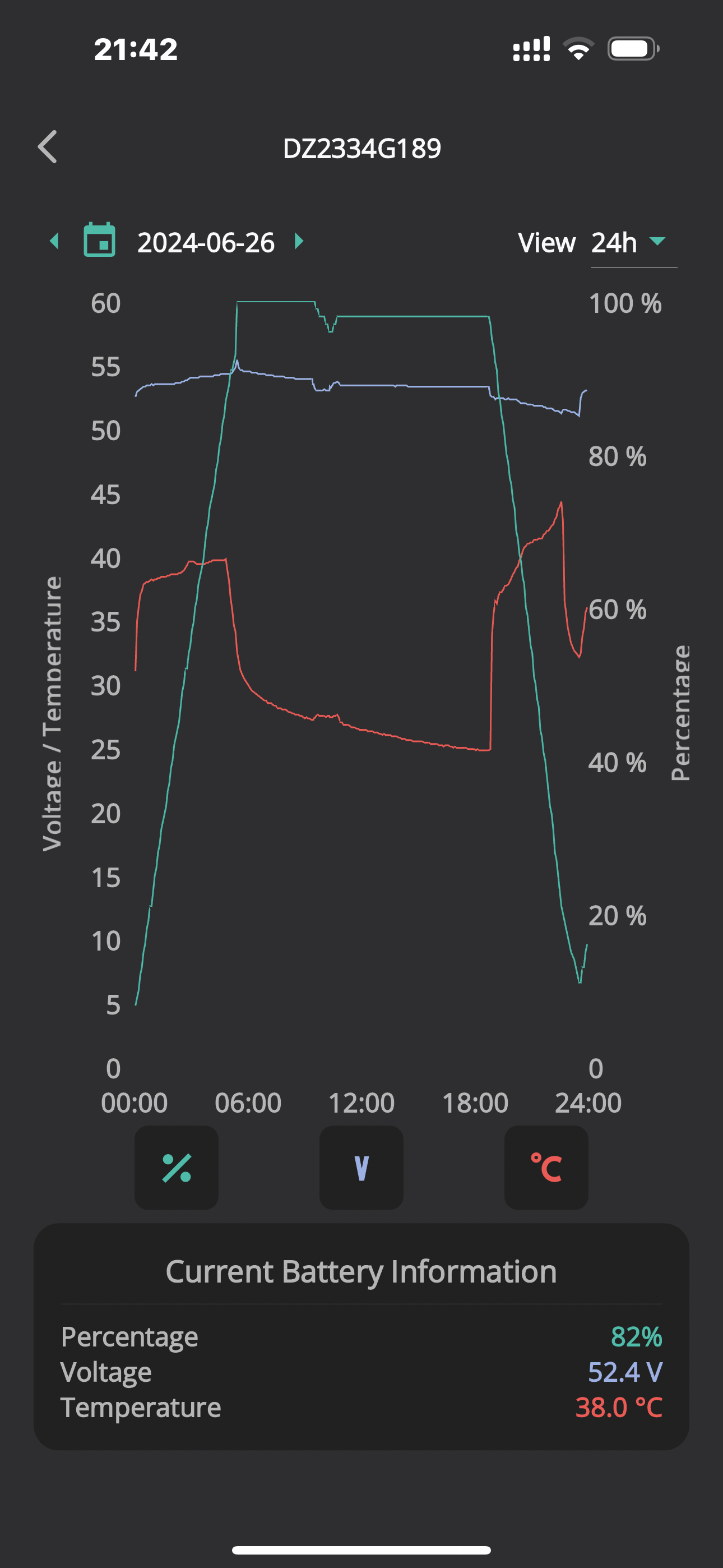
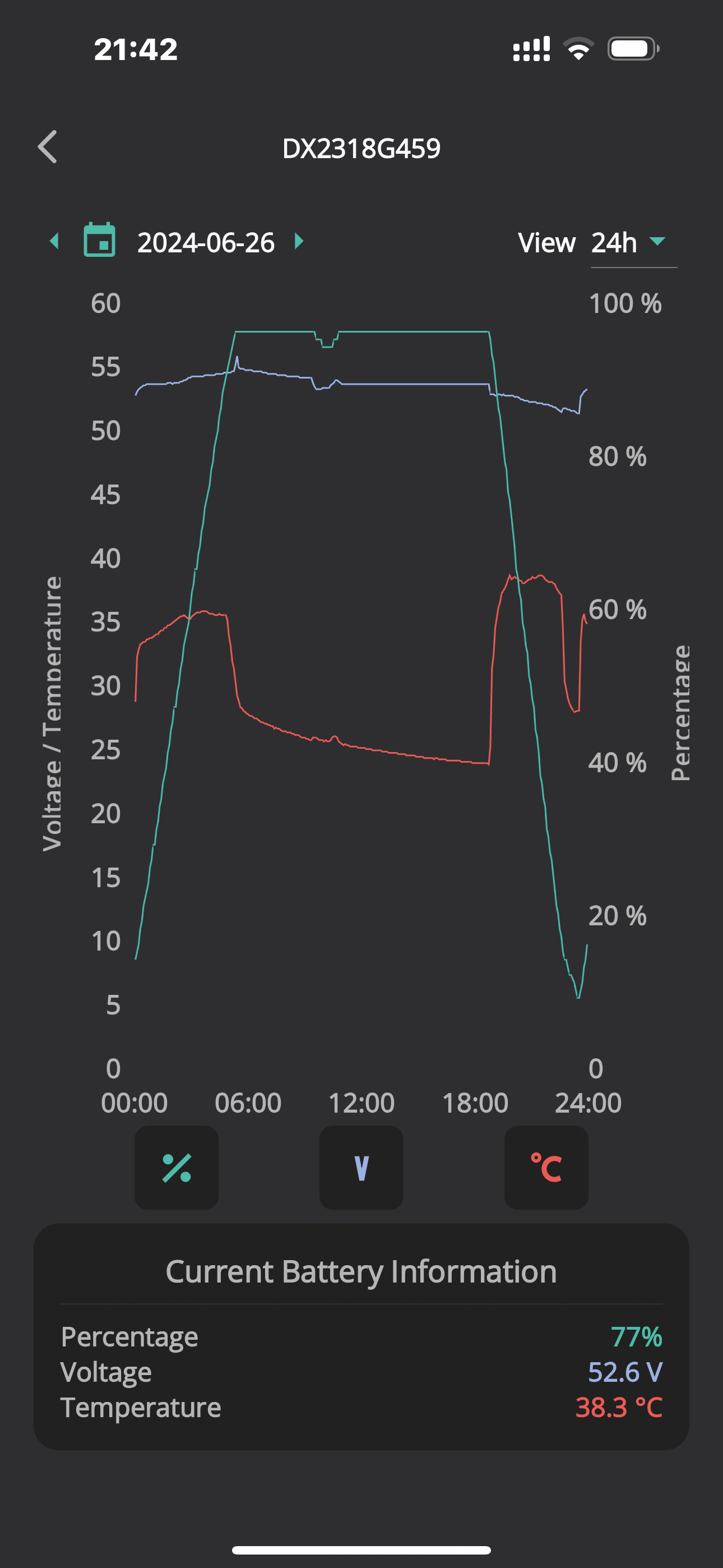
I have 4.8Kw Solar panels, GE 5Kw Gen2 inverter and 2 x 9.5Kw batteries system which has been very stable until I had a second battery installed in February this year. There were problems initially getting the latest software onto the new secondary battery had caused the system to see the additional battery but not use it. so a discharge and Calibration was carried out. When that was sorted the system suffered several BMS over voltage errors which were supposed to be sorted by upgrading to 914 on the inverter and 3015 on the batteries. for a couple of weeks no issues then another BMS OV error and the secondary battery at 100% and the system only using the primary. GE technical solution was to carry out a slow discharge and charge. Now a week later I have had another BMS OV error and the secondary battery stuck at 100%. Tomorrow I will contact GE technical and see what next to do.

Errors so far: -
Battery voltage difference >0.5v typically 0.9 to over 1v
Battery SOC % >10%
Primary battery temperature briefly dropping to zero

C
#2 CGoode

Your system is similar mine (I have the 3.6kW HY Inverter & 2 x 9.5 batts). I added a new battery & some extra panels earlier this year after which I also had Over Voltage errors while charging at night but both batteries did work. All Firmware is up to date as well. I contacted GE who did the same as you which was a remote long slow re-calibration over 27hrs. This seems to have solved the Over Voltage errors but now my batteries don't want to charge past 96%. Also, there is an SOC difference between the batteries of up to 12%. Other than that all OK.
Definitely contact GE & / or your installer because something does not sound right with yours.

O
#3 Ortwin

I have been contacted by GE technical to say they have tried all the know remedies and now escalating the issue to level 2 support as not resolved. Both batteries are now being used by the system after a 100% charge overnight. This afternoon we had a SOC difference between the two batteries of 11% with a voltage difference of 0.2v. Apparently GE say the SOC should not differ more than 4%.
Hopefully a resolution soon.

V
#4 Vestas

Ortwin Apparently GE say the SOC should not differ more than 4%.

The firmware notes for 3013/14/15 would tend to suggest that's complete BS.

O
#5 Ortwin

I can only go by what I was told by my installer. What value have you been given?

O
#7 Ortwin

Are you referring to the reference in BMS 3014 line 3
Remove the condition that the parallel SOC should be less than 20%, voltage of 0.5v tolerance remains (Max 1v)

O
#8 Ortwin

Well another BMS OV error as the system reached 100%SOC. Just as the OV error happened both batteries were at 56.8v. Now the system is only using the primary Battery which I have partially discharged to see if the secondary battery will join the system when the primary reaches 100% SOC. I will be going back to GE support level 2 as it's less than a week since the last BMS OV error and am still waiting to hear from level 2 support. I had noticed the voltages had been quiet close when charging and discharging but the SOC varied by around 14% when discharging.

O
#9 Ortwin

this is the response from GE Technical: -
Your batteries being purchased at different times wouldn't be the issue as they would have been calibrated to line up the soc. It is perfectly normal for the batteries to differ in soc due to the time of install. There are no bugs in 3015 which would directly effect this issue. Due to the batteries being installed last year, eventually the cells will begin to differ in voltage but this will have to be rectified by calibrations. Changing the generation of the inverter wouldn't rectify the gradual difference in the batteries' soc's. The 'Overvoltage' notifications are nothing to worry about as they clear themselves once the voltage gets full.

So my secondary battery stopping discharge after BMS OV error is not a problem according to GE as it will reset itself (eventually). This does not help the situation where my battery capacity effectively halves for a day or so until the secondary battery kicks back in.

O
#10 Ortwin

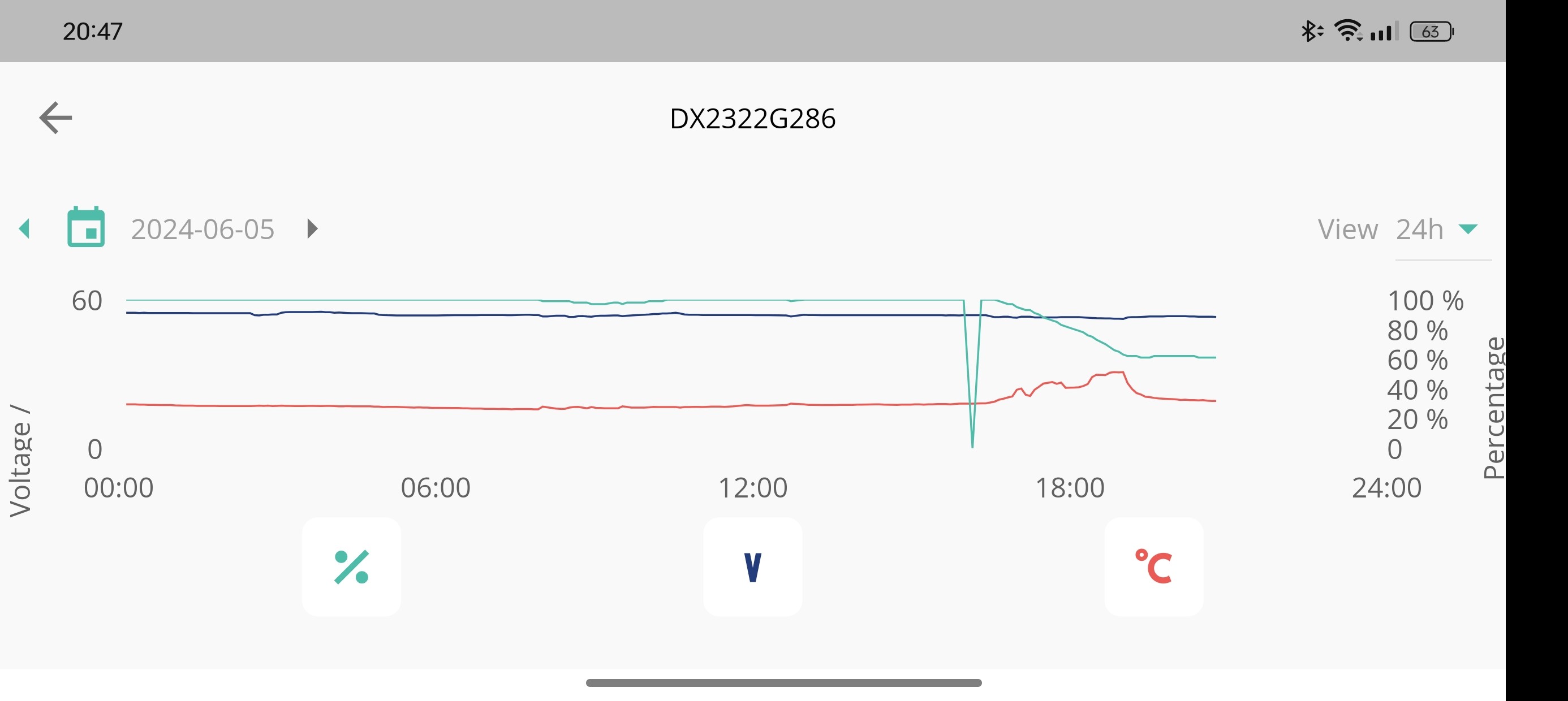
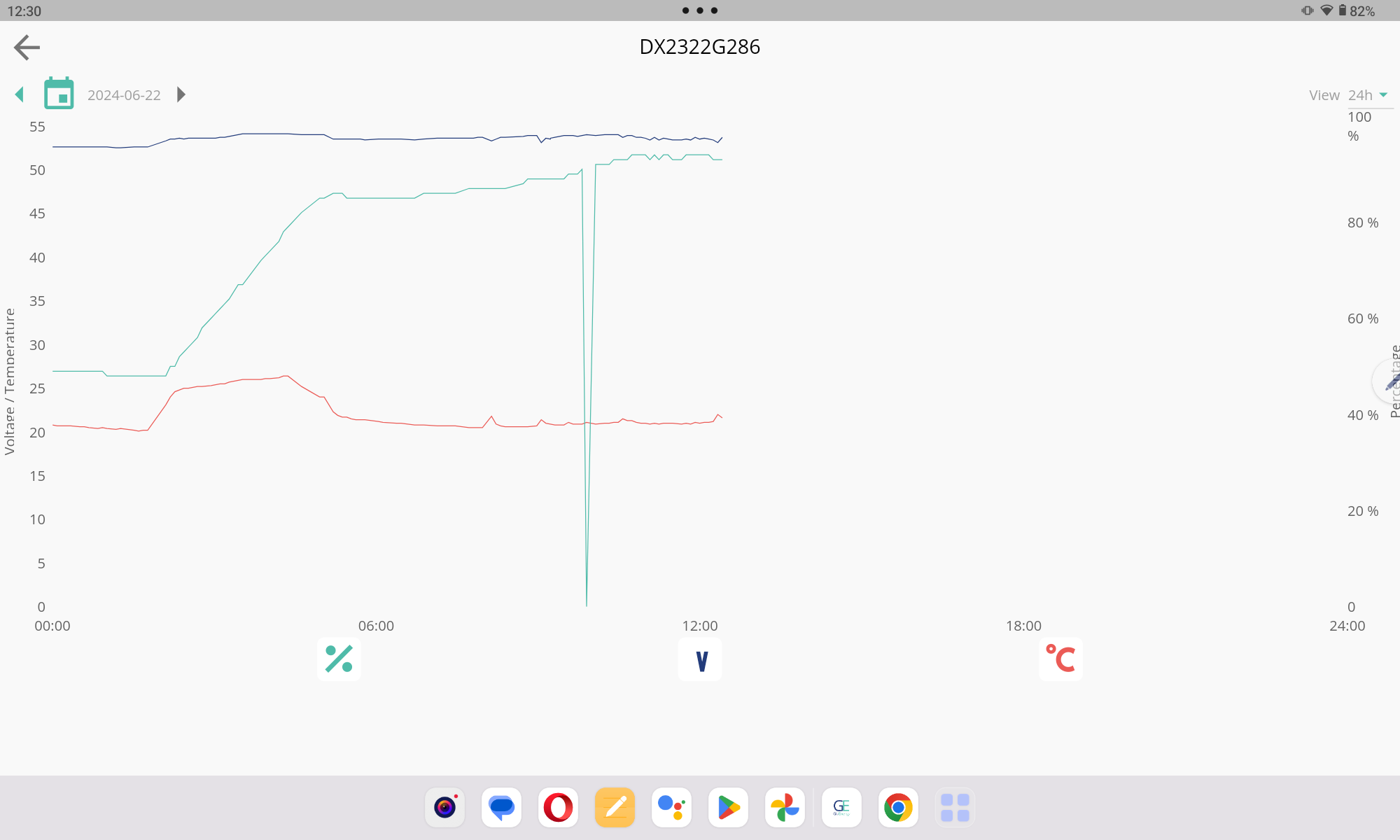
So yesterday I was asked by GE technical to give the times my secondary battery was staying at 100% SOC as it should kick back in after five minutes when the OV error stops, which it doesn't. So I have provided GE technical with screen shots of both batteries for before and after the secondary battery stays at 100% SOC and will wait and see what they say needs to be done to cure this issue.

O
#11 Ortwin

So the reply from GE technical is:
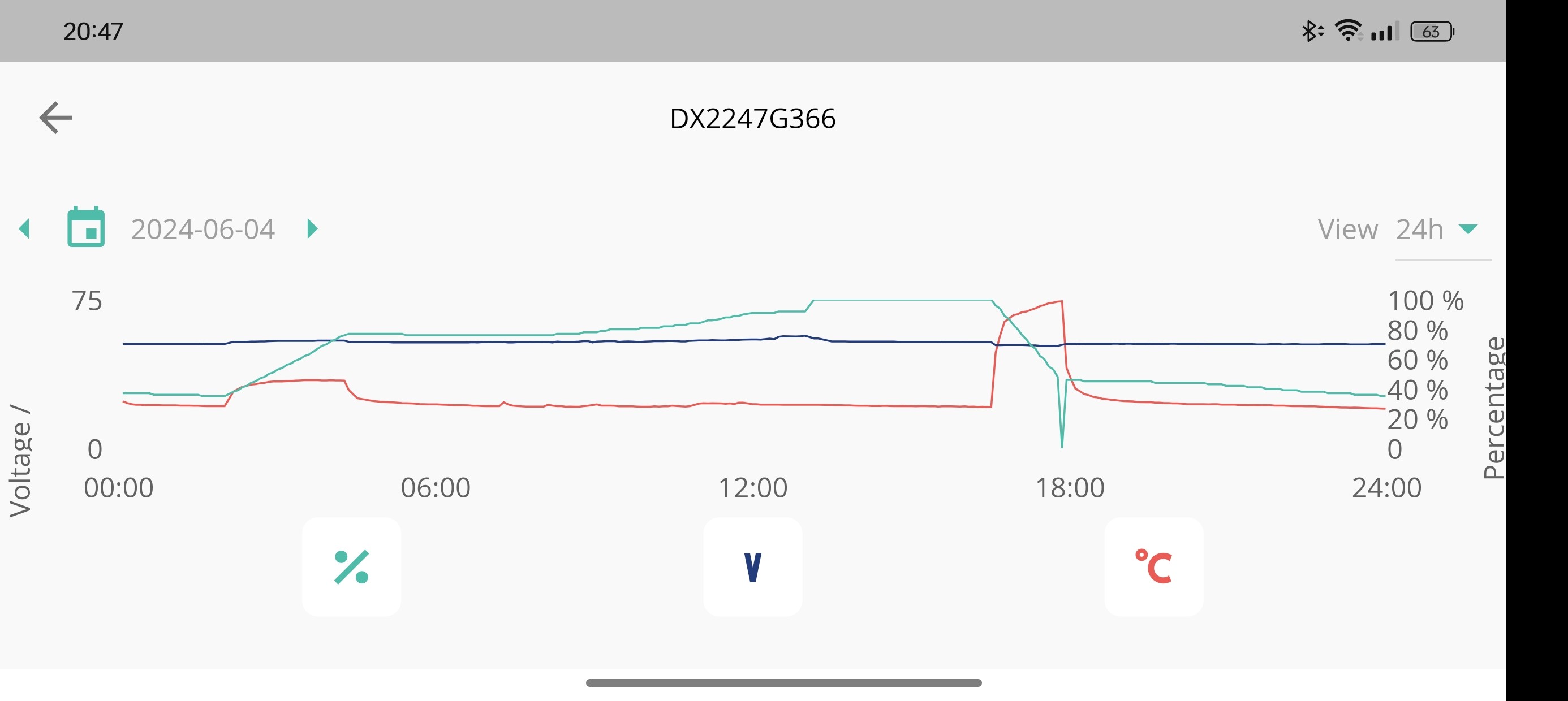
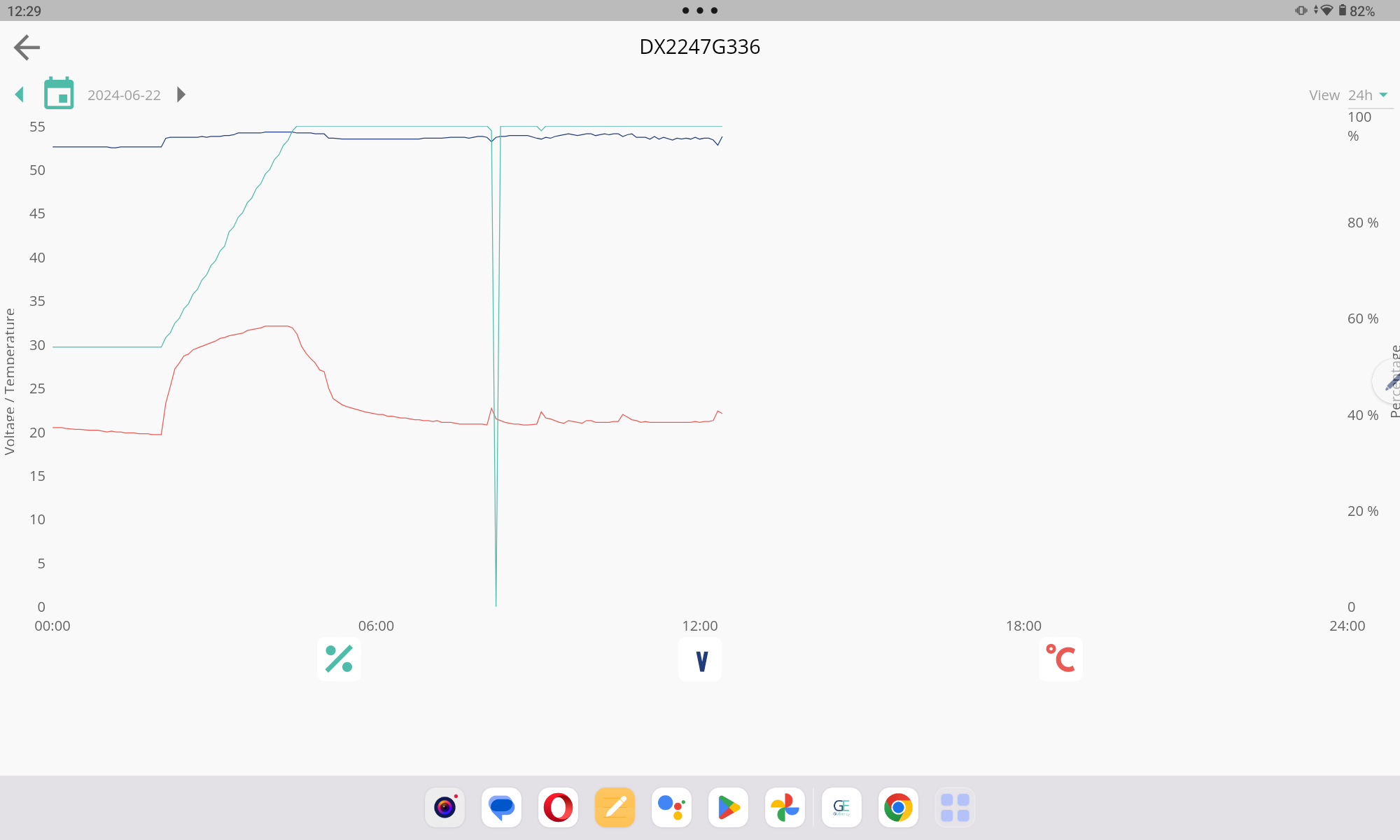
I have noticed that battery *366 reaches 55 degrees C when it reaches 100% and then suddenly drops in SOC and produces temperatures up to 70 degrees C - this is most likely what is causing the issue at hand. Due to this, I have now raised this to second-line. You will be contacted as soon as possible regarding this.

And their reply:
We suspect that this may be a temperature sensor issue. As this hasn't occurred again for the past few days please monitor this and let me know if this happens again. If it does, this can be raised for a site visit.

O
#12 Ortwin

So two more BMS OV errors yesterday, However the secondary battery kicked back in after 5 minutes. GE Technical think there may have been an issue with the primary battery temperature sensor and their reply was For this situation, it just appears to be a bug or a data miscalculation as this doesn't seem to be a regular occurrence with this battery in particular
We are now on our fifth discharge and calibration.

O
#13 Ortwin

Following the inverter software update to 3015 and subsequent slow battery calibration our system has been stable for several days. However, yesterday the secondary battery again stuck at 100% SOC and the system was just using the primary battery at the start of our usual grid export. This caused the primary battery temperature to go 60°c then drop and rise to 70°c untill I stopped the export. this time there was no OV error. So back to GE technical to see what they can do.

G
#14 geoffreycoan

Ortwin I’d say there’s something wrong somewhere in the battery or battery temperature sensor.

I’ve just looked at my 9.5’s temperature for last month and this and it occasionally peaks at just over 50 degrees, maybe 52, but most of the time it’s below 40 degrees. Never reaches anything like 60 or 70.
My battery is in the garage so not particularly prone to excess heat if it were say in a loft.

#15 hoggy

In multiple battery installs the load is shared across them, so the BMS board temp (which is what is getting to 60'C+) is lower on multiple battery installs than if you were to have a single pack.

This is particularly prominent on Gen 2 onwards if you have say a single 8.2 or 9.5 battery - they will always run hottest as you are pulling the max the BMS allows - 80A out of it.
If you had 2 packs then it would drop to 40A each.

I wouldn't panic about the working packs temperature, it's doing what I'd imagine it would do given it's taking all the strain.

(Gen 1 maxes out at 2.6kW so the most you can pull is around 50A - so won't heat up the board as much)
I'd imagine Gen 2 / 3 is potentially capable of more than 3.6kW internally, but because the Giv BMS/Battery is rated for around 80A that is where this 3.6 figure has stemmed from.
I'm betting Gen 4 goes HV next and ditches 51V architecture.

O
#16 Ortwin

I have a Gen2 inverter and it acts up when the secondary battery stops discharging. It's like the BMS forgets to allow the secondary battery to discharge. Luckily my system is outside so runs a bit cooler than a loft instillation. I'm also not happy with the daily dips in SOC and temp, especially on the primary battery. No response from GE technical so far.

O
#17 Ortwin

So now waiting for a site visit by GE technical

M
#18 morak

@Ortwin did you manage to get an outcome on this? I have the same issue (happened 4 times over the last week). When I have previously called GE technical they just do a recalibration which seems to fix it for a bit but then it comes back a few weeks later.

Do you get high voltage on the 2nd battery? My second battery is offline at the moment (stuck at 100%) with 55.7V whereas primary is at 99% with 52.5V.

Was really hoping latest firmware would fix it.

P
#19 Pete UK

Any news on this?

My secondary battery keeps going up to 55v or over and getting stuck there for a whole 24 hours (100%) while the primary is currently at about 53.5v (99%). Then, when my evening grid discharge comes the primary discharges but the secondary gets stuck on 100%. Without any reported BMS over voltage or any other errors.

I updated to version 309.309 but it doesn’t seem to have fixed this.

I too have an engineer coming out (on 20th June). Apparently to replace 2 of my 4 batteries. (Hopefully both the primaries as they appear to me to be this issue?).

M
#20 morak

I need to report it. They wanted to do calibrations last few times so need to work out how to escalate out of 1L support.

As a stopgap, keeping the battery from staying at 100% for a prolonged period, especially as the battery warms up during the day, stops it happening (I am using manual force discharge in PredBat for this until I find a better way).

O
#21 Ortwin

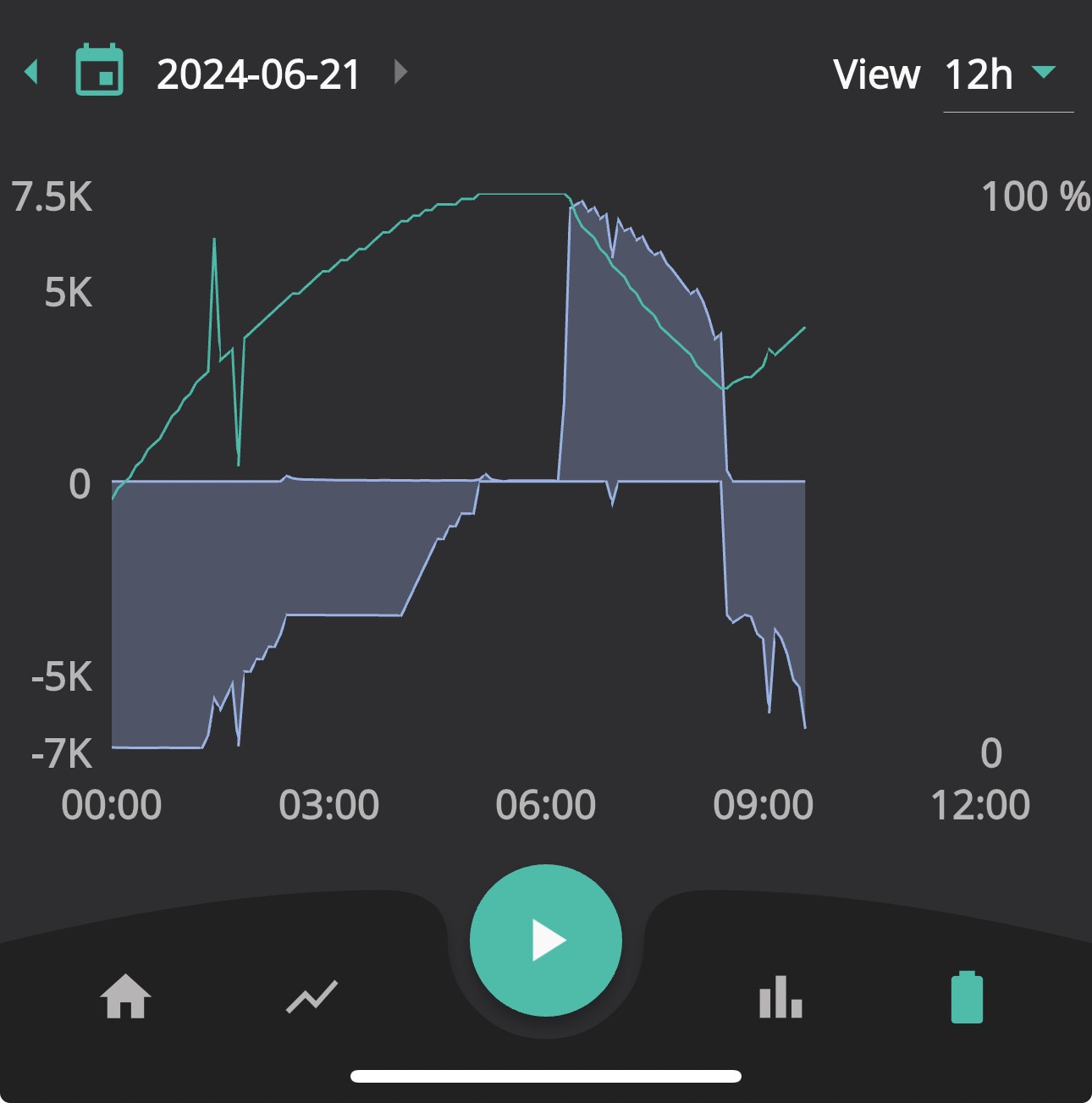
I have a GE engineer coming to inspect the system this Thursday (20th). Since my last slow discharge and calibration the system has been more stable. I had another BMS OV error but it did correct itself. I have been offered a beta version (3017) of the BMS software but not yet installed. Both batteries are now only charging to approx 96/98% SOC (53.6/53.7v) and sometimes then slowly go to 99%. When the BMS OV error last occurred I had a battery voltage of 55,3/55.4. previous to that I was getting 56.1/56.9v.( pre 3015 BMS) There are also less dropouts occuring in the SOC and battery temperature (so far) but I don't charge to 100% during the cheap import period overnight, I just go to 90%.
Another issue is the android app has updated and eco/timed discharge don't want to be set at the same time. I'll ask the engineer when he arrives.

D
#22 DD

Ortwin Another issue is the android app has updated and eco/timed discharge don't want to be set at the same time. I'll ask the engineer when he arrives.

The implementation of timed-discharge has been changed recently, and it now actually matches the documentated behaviour (covering house demand only in the the timed window, and pausing discharge at other times). I didn't think it actually turned eco mode off, though - simply overrides the behaviour outside of the timed period. (But may well do different things on different inverters.)

O
#23 Ortwin

After setting the system to timed export during the peak period. The system continues to export rather than charge the battery when the peak period is over as eco mode is now off and I have to go on the app or cloud and turn eco mode back on.

O
#24 Ortwin

So GE engineer came today and replaced both BMS PCB's and the system is now going through a discharge and calibration. Only time will tell if this cures the secondary battery from not discharging. Apparently the beta 3017 battery software is for issues with dissimilar battery voltages so not needed on my batteries.
Now I'm using the timed battery discharge my system reverts to eco mode afterwards.

P
#25 Pete UK

Hi Ortwin

They came to me yesterday as well (in the morning) - wonder if you live near me !

I got 2 of my 4 (9.5kW) batteries replaced. One primary on one pair and one secondary on the other pair (second replacement of that secondary - but that was the one that was getting stuck at 100%). Primary on the second inverter is the only original battery.

My calibration is complete. All 4 batteries went down to 45v and back up to 56.3v (P), 56.9v (S) and 56.2v (P) and 56.3v (S).

First pair charged up to no more that about 54.5 volts overnight during calibration (indicating “100%” though). Second pair charged up to no more than 53.5v.

Its early days but the first inverter pair looks quite nicely in sync with the voltages, SOC and temps when discharging and charging. (+/- 2-3% SOC with similar voltages). So that’s new and a great improvement.

Not so much on the pair on the second inverter. The SOC is 15% different and the temp is about 10-15 degrees hotter on the primary under load (same performance as before).

I seem to be on 3017 for the battery firmware now. I wasn’t in when they were replaced, so no idea what was actually wrong with each battery and no feedback. I still think the original batteries fitted were from a potentially duff batch.

The calibration seemed to be a bit kinder to the batteries this time and more effectively executed in the way it proceeded. (not sure if that’s part of the BMS firmware update or not) It gradually reduced the discharge and charge rate at the end of the discharge and charge, instead of more harsh steps and seeing the voltage suddenly drop or rise. It was a much rounder/ smoother profile.

Other things I noticed just now that is different is;

1) When I manually hit the “quick play button” to discharge it doesn’t give me the previous full discharge rate of 4kW. it started at 3.6kW and then reduced to about 1.6kW. The other inverter was discharging its batteries at 3.5kW instead of the previous 4kW as well. This slowly reduced as the discharge progressed so after 2 hours they were both discharging at about 1.8kW each! All very strange. It’s as if the “discharge at max rate to grid” button is now following the same profile as the calibration profile !

2) Charging overnight looked similar.

I’m not sure if this is permanent on 3017 or if it’s something they are doing to monitor my system.

Usually this rapid discharge to grid is squared off with a flat top. Now you can see the discharge rate decreasing. Which isn’t really what I want. For “max discharge to grid”

What exactly did you mean by “batteries with dis-similar voltages?” Different size batteries? Or
Batteries with differences between them?
Because all my batteries are 9.5’s so should be the same voltages ! Did they explain more? How come you didn’t need 3017 but I did….? 🤔

P
#26 Pete UK

Ok, so last night/ this morning both inverters discharged and charged the battery pairs.

The timed export discharged the first inverter pair to 10%. The second only got down to about 50% (with a split of 10-15% in the battery pair.)

The first inverter discharged at 4kW and the other started at 3.5kW and reduced to 2kW or so when I last looked.

Charging up overnight, the first pair charged at normal rate 3.3—>3.5kW and the second pair charged at a reduced and reducing rate. Both pairs (all 4) were at about 98% this morning.

When I looked at the logs I got a confirmation that the first inverter pair’s calibration finished but no notification for the second inverter pair finishing ok.

So I think the calibration didn’t work and that’s why I got the curved profiles yesterday. It’s very strange as the second inverter pair seems to almost be stuck in the calibration state for charging and discharging rates.

I’ve asked for a re-calibration of that second inverter pair. Looks like I’ve still got a problem with the primary on that second inverter on the face of things (the only original battery left) but let’s see. The top “full” values are in the region of 53.5-54.5 volt, 98% now. Hopefully won’t see the secondary getting stuck at 100% but will monitor.

How’s yours getting on Ortwin ?

O
#27 Ortwin

I'm located in Chandler's Ford, Hampshire.
My two batteries have not had issues with individual battery cells varying in voltage, which is what I have been told 3017 is trying to sort out.
We had SOC dropouts today on both batteries which the BMS PCB changers were supposed to cure. Add in the temperature dip yesterday would suggest it's not the BMS that's the cause, maybe the Gen2 5 Kw inverter is the issue.
I don't use a dongle but a LAN connection and would think if that was the issue I would be loosing all the data readings.


O
#28 Ortwin

An now despite setting the timed discharge to 16:00-19:00 a couple of days ago the system failed to discharge to the grid. I tried the timed export and eco is still on. I wonder if they have updated the android app again?

D
#29 DD

Ortwin yes, timed discharge now matches the documentation, and runs eco mode (only) during the time window. As you say, timed export now allows eco to be left on (though the UI fight you and randomly cancel one or the other), though on gen-1 it might not allow both.
So what used to be timed-discharge is now eco + timed-export. (Well, always really.)

S
#30 sponev

I've just been offered the "low and slow" discharge and recalibration but GE can't guarantee if it will work. The over voltage issue has been there since 3015 for me. Not that frequent (about every 5 days) and no trips recently, but still disconcerting. I feel that GE are not really confident with this suggested new procedure but don't have anywhere else to go. Is it worth it? I guess if I don't accept now they'll blame me if it goes wrong later. Very frustrating, particularly when they can't explain their rationale.

T
#31 TX200

sponev yeah go for the low and slow.

The over voltage alert is a good thing*

It's stopping it continuing too far into the "buffer" e.g. beyond the usable part of the battery. It's better for the battery health to not fully charge or discharge it. Hence the difference between actual capacity and user availabile capacity.

In an idea world it would stop before it hits that over voltage alert.

(*) Not ideal if it trips of course.

S
#32 sponev

TX200 re-calibration now underway. I'm seeing cell voltages push up over 3.6v which I'm told isn't good and having had a battery trip and struggle to get it going again, it's got to be worth a try. I'll report back.

O
#33 Ortwin

Following our BMS PCB replacement and subsequent discharge/calibration, the primary reaches 100% SOC. However the secondary battery stays about 98% with the same voltage. Now the secondary keeps flipping from discharge to change. Still waiting for GE technical to get back about the continued dips for SOC and temperature on both batteries.

S
#34 sponev

I'm now 24 hours into a slow calibration (2 x 9.5 batteries). The discharge took the overall battery and cell voltages lower than I've ever seen, around 46v and 2.8v respectively, before the recharge happened in the early hours. We're now up to 95% on the primary but the secondary is lagging at 90%. Both batteries are sat around 55v at the moment. I've asked GE for an update as to what happens next but no reply.

In terms of process, the discharge happens at around 2kw and the recharge around 1.5kw. What they didn't say is that solar PV is also throttled so the best we've seen today is around 3.6kw, less than half our usual on a decent day like today. Fortunately we've timed it to avoid much grid draw on peak rates but we're down a fair bit on generation and export today. Hopefully it works.

O
#35 Ortwin

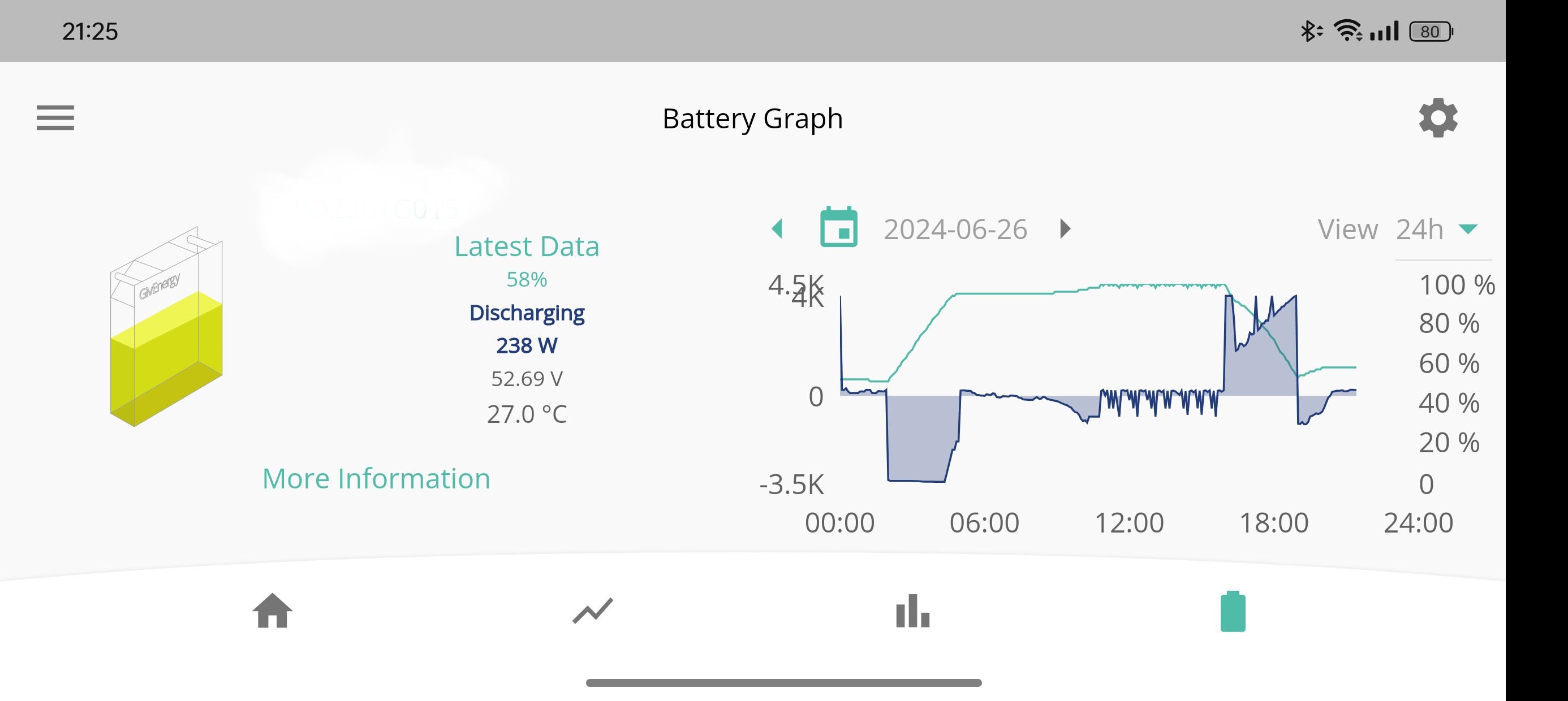
The discharge and SOC values almost mirror each battery. However when the primary battery reaches 100% SOC, the secondary battery is around 98% but the same voltage as the primary battery. Now I keep seeing a seasaw on the app battery graph when the system says the batteries are fully charged.

S
#36 sponev

Update on the slow calibration. This completed as planned together with the latest hybrid inverter update for a Gen 2. After a few cycles I'm still seeing high voltages, higher than previously, but no alarms - have those been suppressed? Also SOC discrepancies both on charge and discharge. As much as 10%. Whilst I had some discrepancies on 3.12, nowhere near as much and also just the one BMS over voltage alarm over several months. Pretty confident in saying that the slow calibration routine hasn't really worked for me and I suspect it's just a sticking plaster. My requested update from GE support has so far gone unanswered and I suspect there isn't a robust resolution for this. My guess is that this is happening quite broadly but the majority aren't aware. If GE would simply advise that it's nothing to worry about and it's on them if the over voltages cause damage, then fine. But so far they won't commit. Frustrating.

P
#37 Pete UK

Ortwin

I’d say that looks pretty normal. I’d be happy with that!

The see saw looks like it’s the batteries being topped up.

I’ve still got some problems with mine. One pair is charging and discharging ok (within 10% of each other - but not exactly matching, close though). The other pair won’t charge or discharge at more than 2-3kW. It starts at 3kW and rapidly drops off to 2kW or less. (usually the other pair is 4kW discharge and 3.4 —> 3.5kW charge.). Calibration speeds were also very slow on that pair but normal on the other inverter pair.

It’s being looked into. Possible cell problem I’m told.

The saga continues….

P
#38 Pete UK

sponev

I think they say up to 10% difference in SOC is normal (or “acceptable”).

I’ve just started to get within this 10% SOC discrepancy on my first inverter pair (after the primary was replaced last week). Whereas previously it was up to 40-50% difference !

  • So for a me 10% discrepancy for the first time in a year since complaining on install day is absolutely amazing. Obviously expectations may differ.

My other inverter pair still has issues (see above).

First inverter pair:
Both primary and secondary replaced.

Second inverter pair:
Secondary replaced twice.
(Still suspect original primary battery is faulty due to continued reduced charge/ discharge rate problems !)

S
#39 sponev

Pete UK Still early days post re-cal for me I guess and I'll continue to monitor. The regular top and bottom end recals will hopefully bring it back into line. I still don't like the high ish voltages I'm seeing mind and will continue to chase GE support on that. They've gone worryingly quiet. My gut feel is that if there are a couple of cells out of kilter with the rest, then the overall control goes to pot. We have one cell on the primary that appears to struggle a bit and wondering what the overall impact actually is. GE won't comment unfortunately.

#40 hoggy

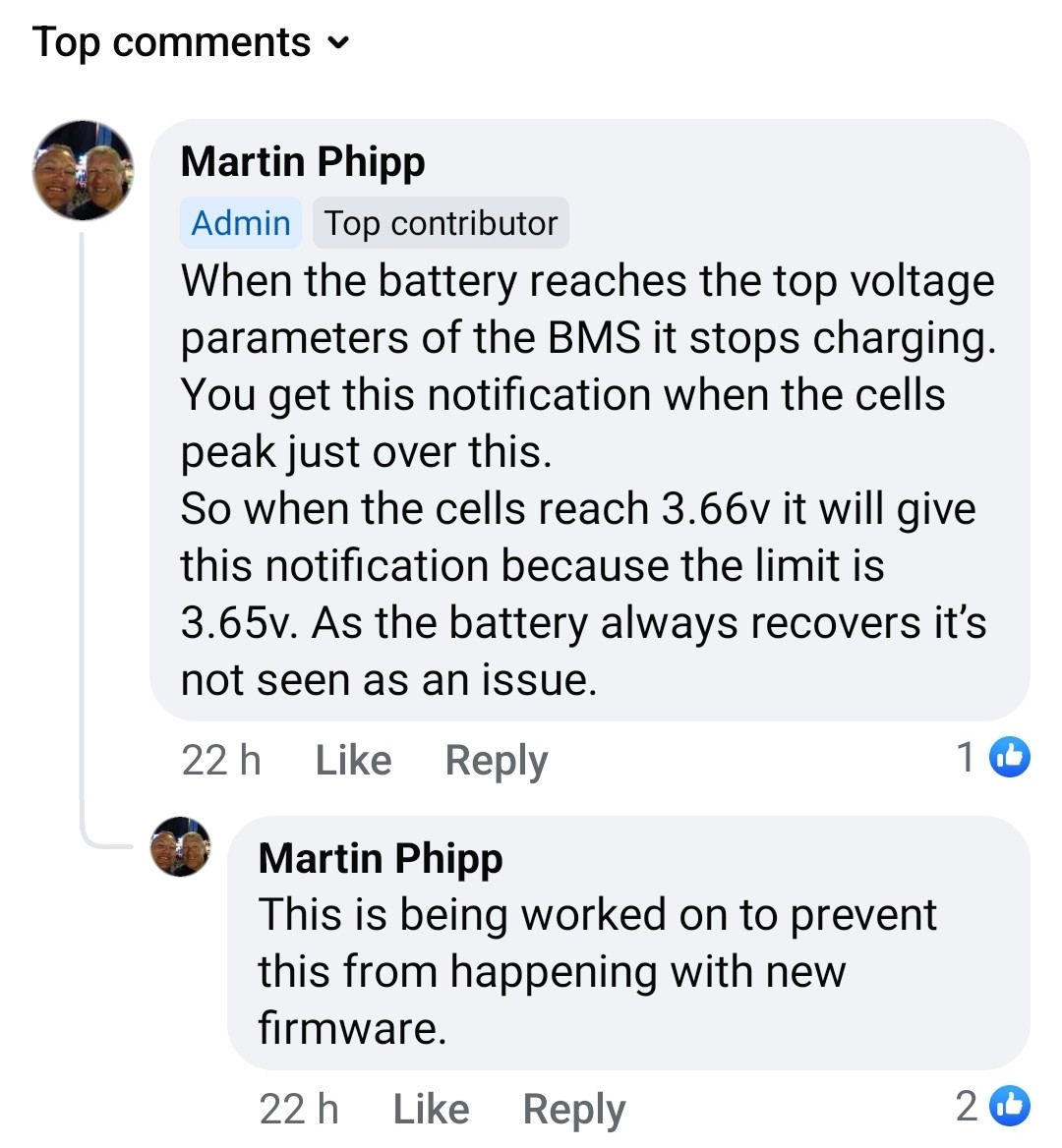
Everyone is quite close lipped about the parameters of the BMS however I did catch this the other day, so the ultimate point of it throwing a Cell/Battery Voltage alarm is 3.65V.

S
#41 sponev

hoggy ah, really useful, thanks for that. It certainly looks like they are aware and working on it. Good to know. It's certainly a more frequent occurrence on the latest firmware so hopefully it's sorted soon and before any cell damage is done. The GE roller coaster continues! At least my issues are now documented if problems arise down the line.

V
#42 Vestas

hoggy It absolutely DOESN'T work that way. Not with 450/451 or 191/193 on a G1 inverter and BMS3015 on a G2 9.5kWh battery.

I've seen instances over 3.7V where no "Overvoltage Notification" was issued on the portal. Wasn't for a few seconds either, more like 45 minutes over 3.7V...

#43 hoggy

Vestas I can only go off what is put out there!
I might finally buckle and start playing with that little 4 pin molex next to the USB stick in mine. Presumably how the BMS is setup in the first place.

V
#44 Vestas

hoggy Not having a pop at you mate 🙂

I've come to the conclusion that the only way to prevent overvoltages (even with fast response f/w) is to let the battery go flat every day. No problem whatsoever then, proving (as we know) the elephant in the room is the inability of the BMS to track the SoC accurately. Correct SoC = correct charge routine, charge rate tapering off once 90% SoC is hit.

NB - the BMS is a LOT worse at tracking SoC when the charge source is PV, can lose the plot in two days 🙁

S
#45 sponev

Vestas it does appear that 3.15 is a bit of a crock despite it being the recommended version. On 3.12 I could maintain decent control and virtually no over voltages simply by cycling the battery reasonably frequently - it was manageable. 3.15 has been a bit pants since installation, even with the slow/low calibration which doesn't really seem to have done anything other than waste time and solar generation. Ho hum. Are GE any more forthcoming in any of the other forums? I only look here these days.

O
#46 Ortwin

Pete UK
What's the battery temperature when it throttles back?

O
#47 Ortwin

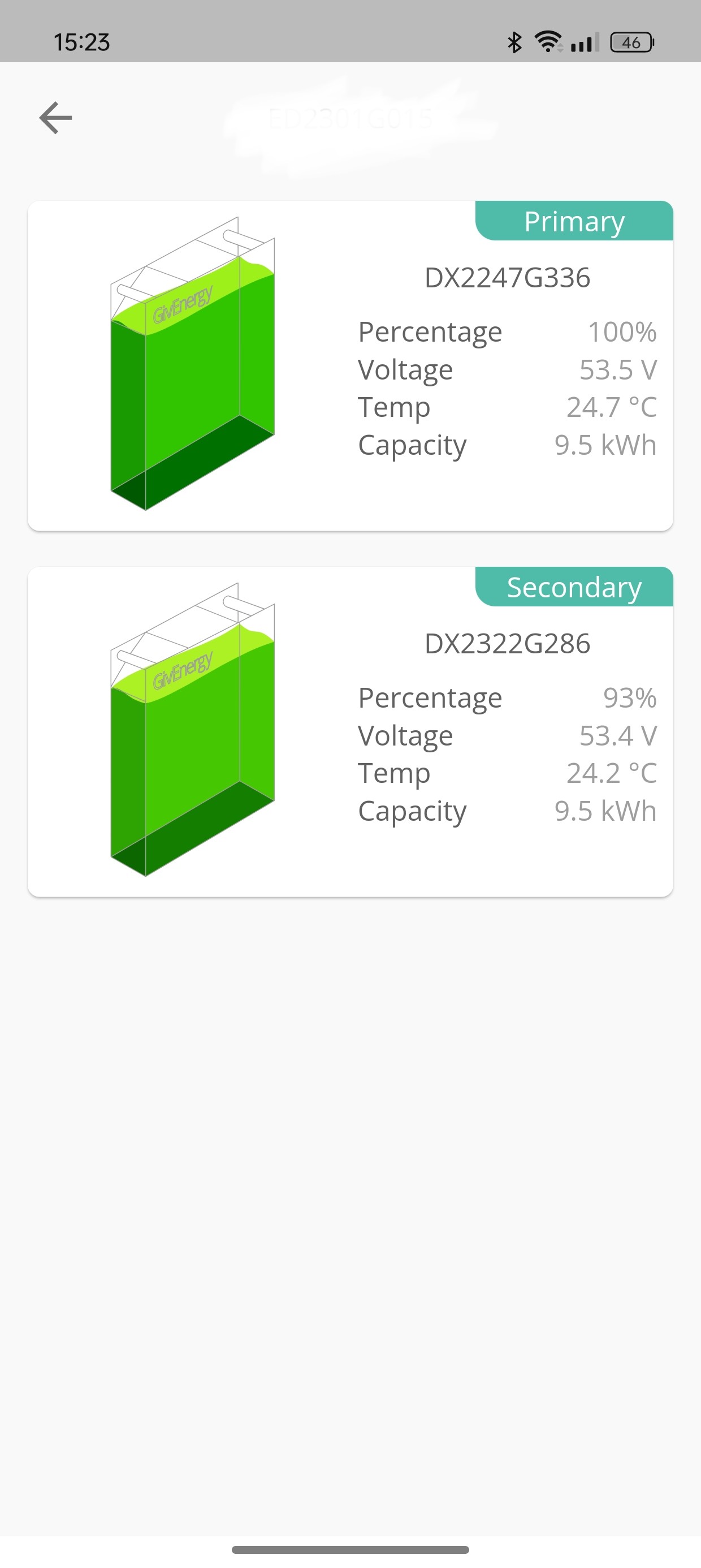
So on the app it says the batteries are at 100% SOC. However, the primary is 100% and the secondary is only 93% SOC when you look at the battery details with the voltages the same. Now the system is discharging the batteries all be it 170w rather than charging the secondary battery.

P
#48 Pete UK

Ortwin

Do you mean when it’s finished charging and hit “100%” ?

V
#49 Vestas

sponev There's a lot of changes between 3012 and 3014/3015 but I think basically 3015 uses more of the battery storage than previous versions. People ( @hoggy IIRC ) have mentioned that it seems to remove the 80% depth of discharge limit on G1 batteries - whether intentional or not I dunno.

My experience of GE BMS firmware is basically -

3012 - SoC all over the place, not many/no notifications on portal.
3013 - Discharged battery to 45V (and below on one occasion) before cutoff. "Undervoltage notifications" on portal. Requested calibration, no improvement so stopped the worst of that behaviour with automations. 3013 was pulled because it "killed" batteries apparently.
3015 - Overcharged battery to 56-57V immediately after upgrade/calibration. No real improvement until "fast response" f/w installed - noticeably reduced (but not eliminated) the "Overvoltage notifications" on the portal.

All in all, not that great really. Having said that, none of these notifications were visible via the app so had I used that I'd probably be blissfully unaware, much like the average user.... 🙂

P
#50 Pete UK

Yesterday morning on the good pair it was;

Primary temp 39.8 c
Secondary temp 36.0 c

The other inverter pair (the one where the charge and discharge rate has dropped off for unknown reasons) was (after finishing at about 2kW charge rate);

Primary 35.7 c
Secondary 31.5 c

This is the “normal” pair yesterday; The primary jumped from 93% to 100% after charging and idling a bit and the secondary just stayed at 95% all day.


S
#51 sponev

Pete UK any chance the second pair is stuck using the same discharge/charge rates used by the calibration. Even when my system reported that the calibration had finished, it was still stuck at the lower rates. It sorted itself out only after I applied the latest inverter firmware update which appeared a few days ago. A reboot on the old firmware version didn't resolve it. Long shot but worth a check.

S
#52 sponev

Vestas Our system has been in for around 18 months. I think we started with 307 or maybe 309 with the frustrating SoC issues back then. We progressed to 312 which was a lot better for us to be fair. We avoided 313 due to the reported issues but were effectively forced by GE to move to 315 after we had a battery trip and they pretty much refused to do anything unless we updated. 315 has been quite a bit worse, particularly the over voltage issues, and despite the time wasting, ineffective calibration run they insisted on. I've asked for a support escalation to level 2 but not heard anything back. I suspect they actually don't have a solution but hopefully I'm wrong! Be nice if they replied though.

P
#53 Pete UK

sponev

It’s a possibility

P
#54 Pete UK

They thought maybe that it was because my export limit wasn’t set previously. So they set that but no difference to the charging and discharging rates on that inverter !

Except that now both inverters have started charging and discharging at a reduced rate (half) and the first inverter charges one battery to 100% and one to only 50% SOC overnight. (Both voltages similar though, at 53.4v or so. Then trickle charges all day at 200-300w and over many hours the 50% SOC battery’s SOC might go up. The second inverter does charge them both up to 100% but just very slowly.

I’m on 309.309 and 3017 for the batteries. So can’t upgrade the firmware !

I tried an inverter restart. No change. Support is radio silence. It’s all working at half speed now.
All very infuriating.

Any suggestions?

S
#55 sponev

Pete UK Something still not set right it sounds like. Have you had a trawl through the settings in the portal? Very odd that mine also did that directly after calibration, but it cleared when I updated the inverter firmware. Is there a "reset to defaults" option somewhere? What level support is looking at the issue? Unfortunately a lot of the first level guys are trotting out parroted "fixes" which aren't necessarily correct, like my low/slow calibration that's made things quite considerably worse.

P
#56 Pete UK

sponev

Last I heard Mick S and Paul L @TheDragon (GivEnergy) had looked at it and passed it on to Technical support after exhausting all the common areas. But since then I’ve had the other inverter start to operate at reduced speeds and the 50% SOC discrepancy problem appear at the same time on that inverter’s batteries.

I haven’t heard anything back yet. Maybe because it’s the weekend.

I updated to 309.309 10 days before the replacement batteries and all seemed normal after. Only changes after that were the two replacement batteries and moving over to the new ‘balancer software’ specifically for the Gen 3 inverters.

I wonder if it’s worth them re-updating the firmware or downgrading it to the previous one - but no news so far. Some feedback would be good even to say “we’re monitoring it” or “we’ll try this”. Maybe on Monday, I’ll hear something. But from who, I don’t know.

S
#57 sponev

Pete UK Well if Paul hasn't been able to solve it, then it's something obscure I guess. Mine just threw a complete wobble after a timed exporr. All reset as expected after the export period but then I decided to manually export some more. When I used the app control to re-enable normal operation, for some reason the battery went into pause mode and grid import started. Took me a while to work out what was happening and it looks like some of the settings were corrupted at some point. Flaky. Anyway, good luck with getting it sorted quickly.

#58 TheDragon (GivEnergy)

Pete UK
Battery 2 ending G459 didnt take the update to 3017. So you have one at 3017 and one at 3015. Which will be the cause of your issue

P
#59 Pete UK

TheDragon (GivEnergy)

Ah, ok, many thanks Paul. Can you fix that for me your end when you’re next in the office?

Much appreciated. Really appreciate the reply.

  • also any news on the reduced charging/ discharging rates? Or should this fix both?
S
#60 sponev

Pete UK sounds like it was still partly stuck in update mode but good that it's been diagnosed. I've had two out of three updates fail and needed manual clear and load of new firmware locally. Hopefully they can sort it remotely but you may end up with some front covers removed and faffing about with USB sticks. But they'll be able to advise. It's a bit of a rollercoaster unfortunately.

M
#61 morak

How do you go about getting 3017? I am not seeing it on the portal and I have the same problems (been managing it by preventing the battery getting to 100% SoC through PV charging so far, but it's very manual)

M
#62 morak

Never mind, found the other thread discussing 3017, guess I'll have to either continually manually managing the batteries or try to persuade support to push me up to 3017 early.

P
#63 Pete UK

Did anyone get this problem resolved?

I waited 4 weeks for an engineers visit to change two batteries and now I’ve been waiting another 6 weeks+ for another engineers visit because one inverter pair is now charging and discharging extremely slowly and effectively unusable! (One inverter pair will only charge and discharge about 2kWh a day out of the 19kWh available.) meanwhile I’ve seen one battery on the other inverter pair get stuck at 100% a few times.

….still waiting…. Complete radio silence from support. I chased them 3 weeks ago and another chase up email a couple of days ago, expressing my frustration with no replies and requesting escalation. Still nothing. Meanwhile, I’m losing money from export.

The only replies I’ve had were 1) above from @TheDragon (GivEnergy) and 2) a reply saying there are no engineer slots at the moment (3weeks ago).
I mean, it may be interesting that one battery didn’t take the update but what now? Turn it off, while I’m waiting so at least I can use some storage from the other battery? send me a new USB to swap over? Send me software so I can do it myself? Tell me it’s broken and needs replacing? What?

If it’s possible for me to manually update the USB stick, I’d be happy to do that myself but there has been no contact or suggestion from GE to do this.
And minimal response to my emails (1 reply, saying wait longer basically!). I’m so frustrated. It’s been a year of pain since day one of the install: not working correctly, wait a month+ for a visit, still not working, wait another month+, still not working properly, wait another month. Basically this for a year.

No suggestion or attempt to try downgrading inverter/ battery or to re-apply the update? @TheDragon (GivEnergy) , can you please look into this and reply as to what’s happening?

I’m so disappointed and frustrated by the lack of communication from support.

S
#64 sponev

Pete UK I've been following your problems for several months now and in your position I'd also feel royally pi$$ed off. I'd push for a firmware re-load, at least to try to fix it. I've had to do that with batteries and the inverter after failed updates. I've had more success calling them rather than emails - it depends who you get but I've had one of the support guys help me through a re-intall of firmware over the phone. With mine, I had to purchase a "special" cable from Amazon for the inverter re-load and then messing around with the covers off the batteries and usb sticks to get those sorted. A big old faff which shouldn't really be necessary, but it got me running again. I'd try hanging on the phone until you get someone willing to walk you through it. Have you also tried posting on the Facebook group, they're pretty proactive on there, moreso than here. Are you also on the Tesla forum by any chance? Good luck with it, it's doable if you get the right person to guide you.

P
#65 Pete UK

sponev

Thanks for the reply.

It’s excruciating ! I Haven’t posted on the Facebook pages. Hardly ever use it. Someone has been trying to hack my account recently, so it’s locked down to max security right now.

It should be that they communicate with their customers via your official email, rather than via a third party social media site ! But I get your point.

Yeah I’m on the Tesla forum as well.

I’ll try calling them on Monday. Enjoy the weekend.

S
#66 sponev

Pete UK Yes, I know what you mean, email should be sufficient but lots of companies seem to think it's appropriate to deprioritise it these days. For example, Octopus are pretty crap now via email but very responsive on Twitter (X). Bit daft really.

Anyway, good luck with it

#67 Tenkaykev

Pete UK
I suppose it's the " squeaky wheel " response, deprioritising email support which is one to one, in favour of the customers who can " shout " on Social Media because that is publicly visible to more people. At the end of the day we are all customers seeking solutions, favouring one group over another shouldn't really be a thing.

#68 TheDragon (GivEnergy)

Pete.

I have looked at the inverter, took a while to find a serial number, in past posts

Ive read the details on the ticket and brought it to the field services team's attention

P
#69 Pete UK

TheDragon (GivEnergy)

Thank you. Anything I can do on the meantime?

e.g. should I be turning a particular battery off?

V
#70 Vestas

sponev Octopus are pretty totally crap now via email

FYP 😉

O
#71 Ortwin

I must be lucky as OE have usually replied within 2 days to my emails, mind you I always send my emails to a particular person.

V
#72 Vestas

Ortwin Octopus don't even reply to emails sent to their published complaints address.

P
#73 Pete UK

Just to add some feedback to this thread…

My system is now fixed and working. 👏 anyone else fixed?

It’s been up and working properly for 3 weeks now. Had two further replacement batteries. Stuck the two new 9.5’s on one inverter. The original battery (15 months old now) and one previous replacement are on the other inverter. Calibrated the older pair. Didn’t calibrate the new pair (told they had been rigorously tested before leaving GE HQ and cycled 4 times and I didn’t want to break them on day one!)
I’m on 309.309 firmware and 3017 inverter firmware. 5.0 hybrids.

It’s taken 14 months of stress since install day to get to this stage.

Is each battery pair balanced within 10% SOC all the time: NO. Not when discharging.

Is the beta balancer software keeping each inverter pair balanced: YES, I think so. Working pretty well after a rogue register was corrected a few days ago and the portal issue was corrected for me. 🤞🏻

Is the secondary getting stuck at 100%: NO. So far so good. Not seen that.

Do they idle at the lower end/ empty: not noticed that but they don’t spend much time there as that would mean using peak rate.

Is the cell voltage balanced: YES, usually within 0.2v

Does the primary battery get hotter under load:
YES. (About 3 degrees C) although the older one gets about 6-7 degrees C hotter than the secondary.
The secondary now mostly catches up and gets hotter than the primary when it’s less than 20% though.

Does the individual battery show 100% when the ‘high level pair overview’ shows 100%: NO. It could be 95/98 or 95/100 or 96/95, or whatever).

Does it jump up to 100% when idle: sometimes. Or maybe one does. Or not.

What voltage is it when full and idle:
New pair: about 53.5v
Older pair: could be 57.0v or less down to 53.5v

Do they both idle when full: NO. New pair does. Older pair discharges around sub 50w all the time. Might idle for a minute a day. Might not.

Am I able to get the full 19kW in and out of each battery pair now: YES. (Bit more on the new pair)

Are GE happy they are working correctly: YES

Am I happy: YES. (If I don’t look too closely 😂)

Whilst it’s operating correctly I’ll only be looking at the high level view from now on (probably I’m lying here). I’m not worrying about voltages, individual battery SOC, battery temps, inverter temps, drops in SOC, none of that. I’m getting use of the full capacity I paid for now and it’s charging and discharging as described. So that’s good enough. Great in fact.

Have I now put the kiss of death on my system: …..

O
#74 Ortwin

Since going to 3017 my system has been quite stable. However I have experienced my secondary battery staying at 98%/100% whilst ding my routine discharge. Today both my batteries reached 56.2v (100%) which is surprising as I'm on IOF. Last time I contacted GE support they said, it's ok as the secondary battery will drop it's voltage and then come back into play which is good but annoying as I can't guarantee how much spare capacity I have at any one time.

P
#75 Pete UK

Ortwin

Mine are still working ok on 3017. Not seen a secondary get stuck at 100% so far since the recent replacements.

R
#76 Richy999

Sorry to resurrect this thread, but wanted to check if everyone has resolved their problem.
I am experiencing a similar thing with two batteries running with as much as 16% difference in state of charge. I’ve also had the secondary battery lock at full for 12-18 hours whilst the primary discharged. During that time the voltage was way out of sync with the primary by 2/3 volts, and occasionally 4 red lights on the display. It seems to eventually resolve itself after a period of time. I did a calibration which is what appeared to lock out the secondary when it reached 100%
It’s a gen 2 inverter and 9.5 primary with 5.4 gen 3 batteries.
GivEnergy looking at it but wondering if we can point them in the right direction, or are they aware.
312/312 inverter software and 3017/4007 battery