NiallKilleen eg datasheet for those jinko panels is at https://theecosupermarket.co.uk/wp-content/uploads/2024/03/Datasheet-for-Jinko-Tiger-Neo-54HL4R-B.pdf
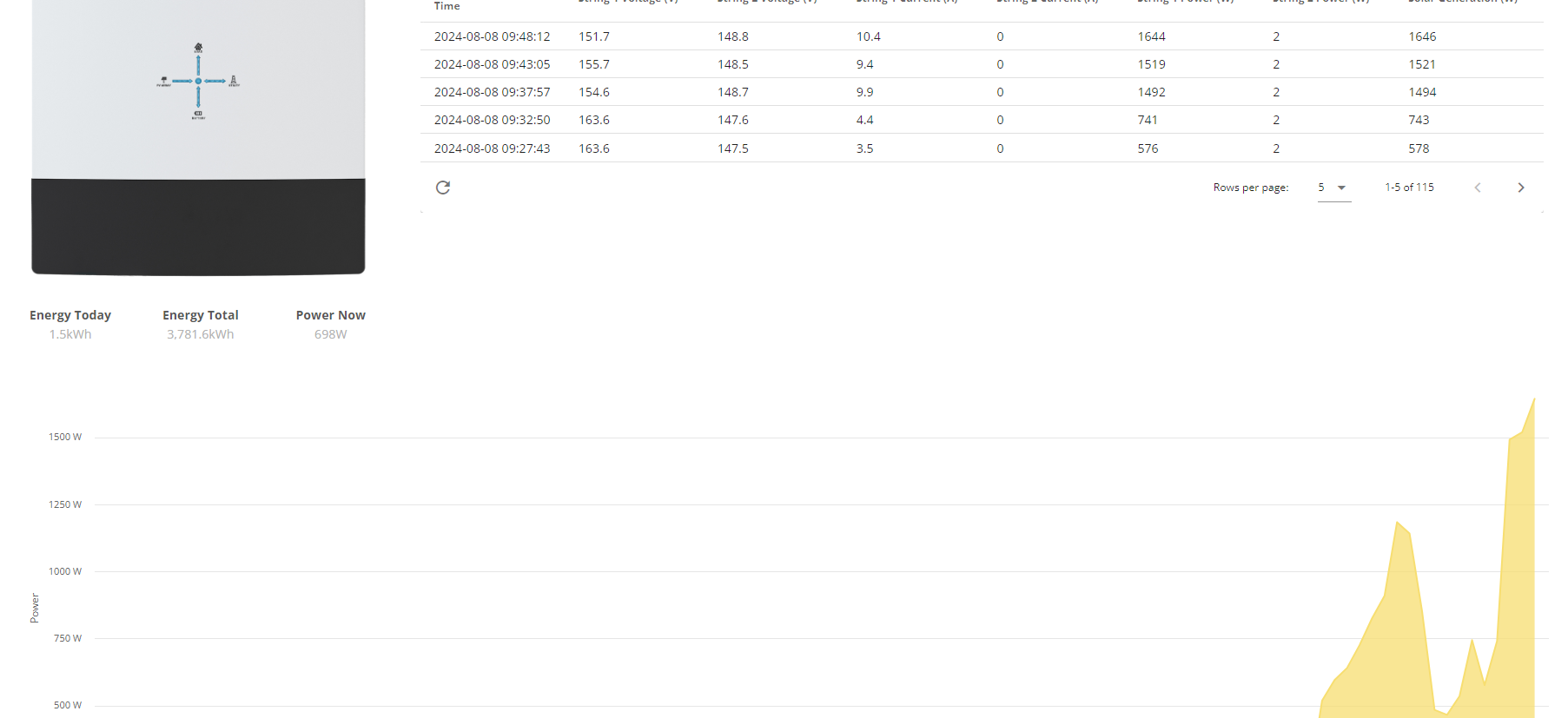
That shows that voltage for peak power is around 35V, but drops off to 80% at 75 degrees. So 4 panels at 75 degrees would only have a voltage of around 112V, which is below the minimum threshold for the inverter. But when it's cooler, you'd get 140V. (Panels are arrange in series, so the voltages add, but the current through them all must be the same. Which is why one one is shaded, the current through the whole set drops.)
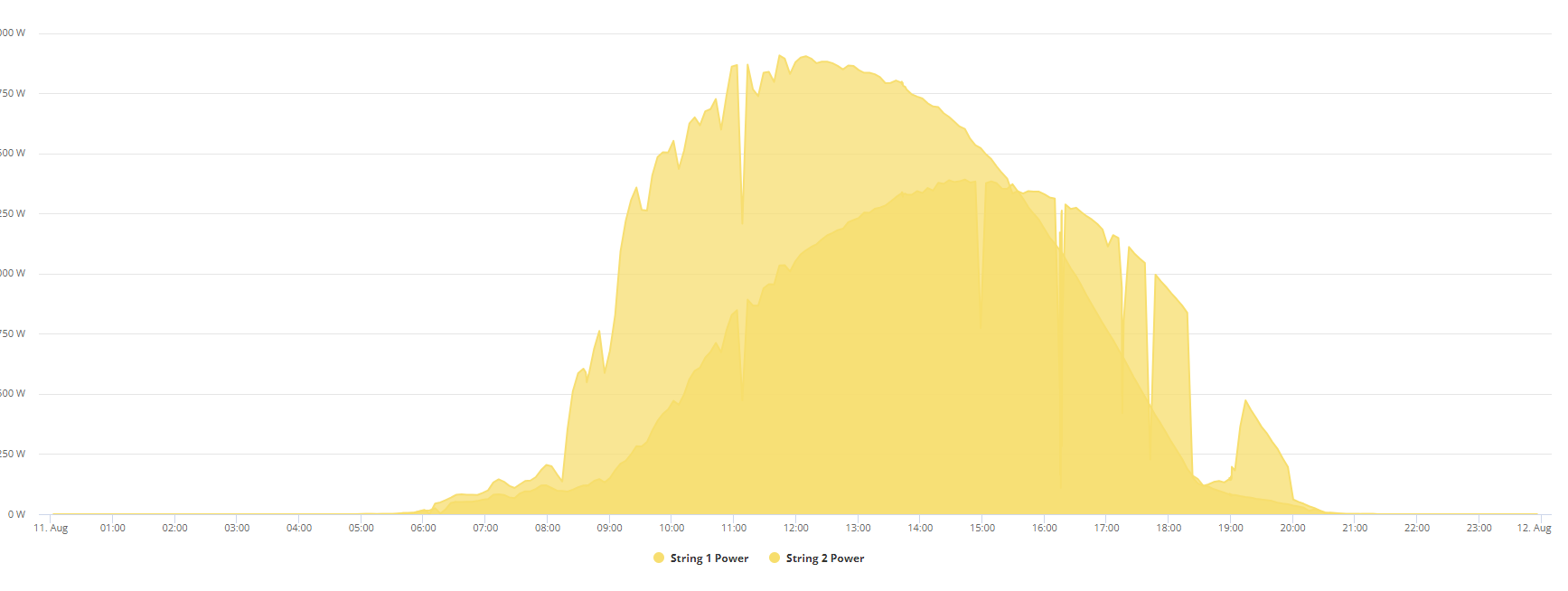
I've noticed that on cloudy days, when the sun does come out, generated power is higher than on cloudless days - I'm guessing that the panels are cooler, and so are able to operate at higher power when they do see the sun. But on cloudless days, the panels get and remain hotter.
Not sure how to mitigate this. Fitting optimisers, perhaps: my understanding is that while they cannot increase the power from the panels, but they can adjust the voltage they present to the inverter. ie they might turn 10A at 30V into 8A at 37V. Maybe something like that, anyway ? (More importantly, they can patch up one shaded panel so that it doesn't drag the serial current down.)