Generation sudden drop when weather consistent

25 comments started 2023-04-02 last 2023-04-05
CommisioningGivEnergy ProductsHybridBattery
M
#1 michaelhoskins

Hi,
I'm about a month into my system and happy to see some sunny days. I have a 5.1kwp array, 5kw hybrid inverter (gen 2) and a 9.5kwh battery.

I have an issue I've spotted a couple of times so far but really showed up today. Essentially, generation is going pretty well and the battery charging up. Then just as the batter gets close to full, there's a jump to 100%, which I understand is to be expected.

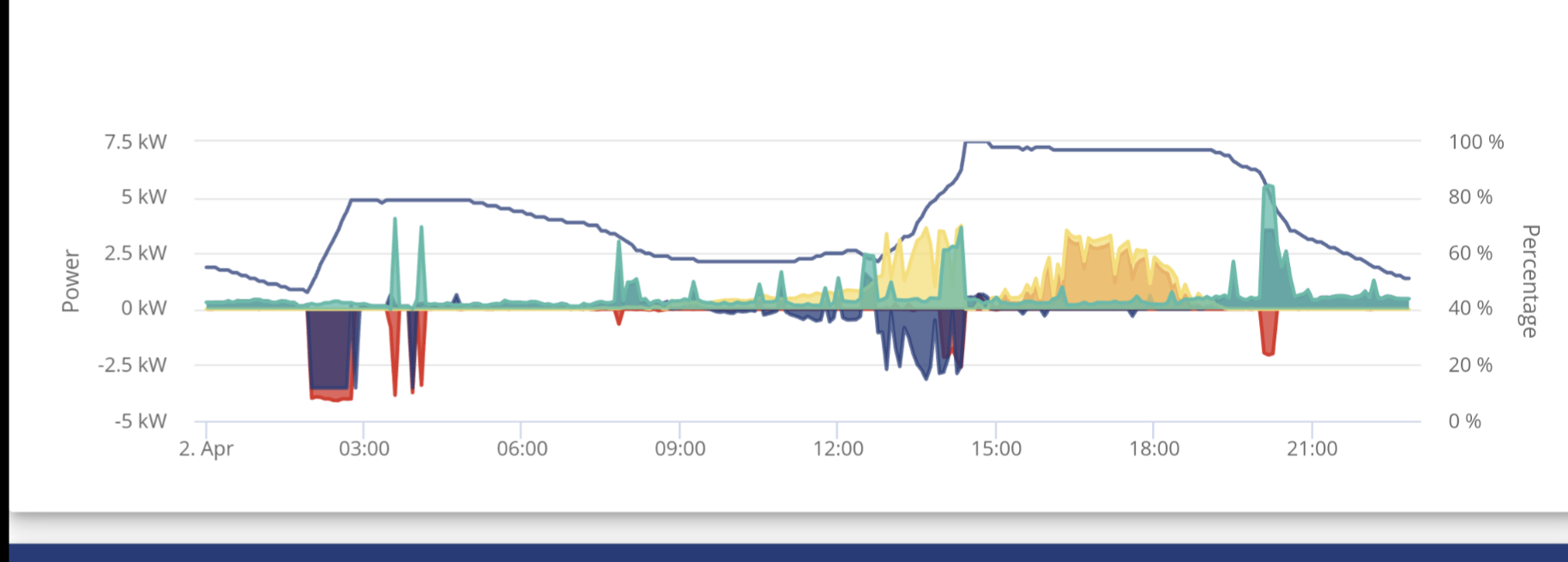
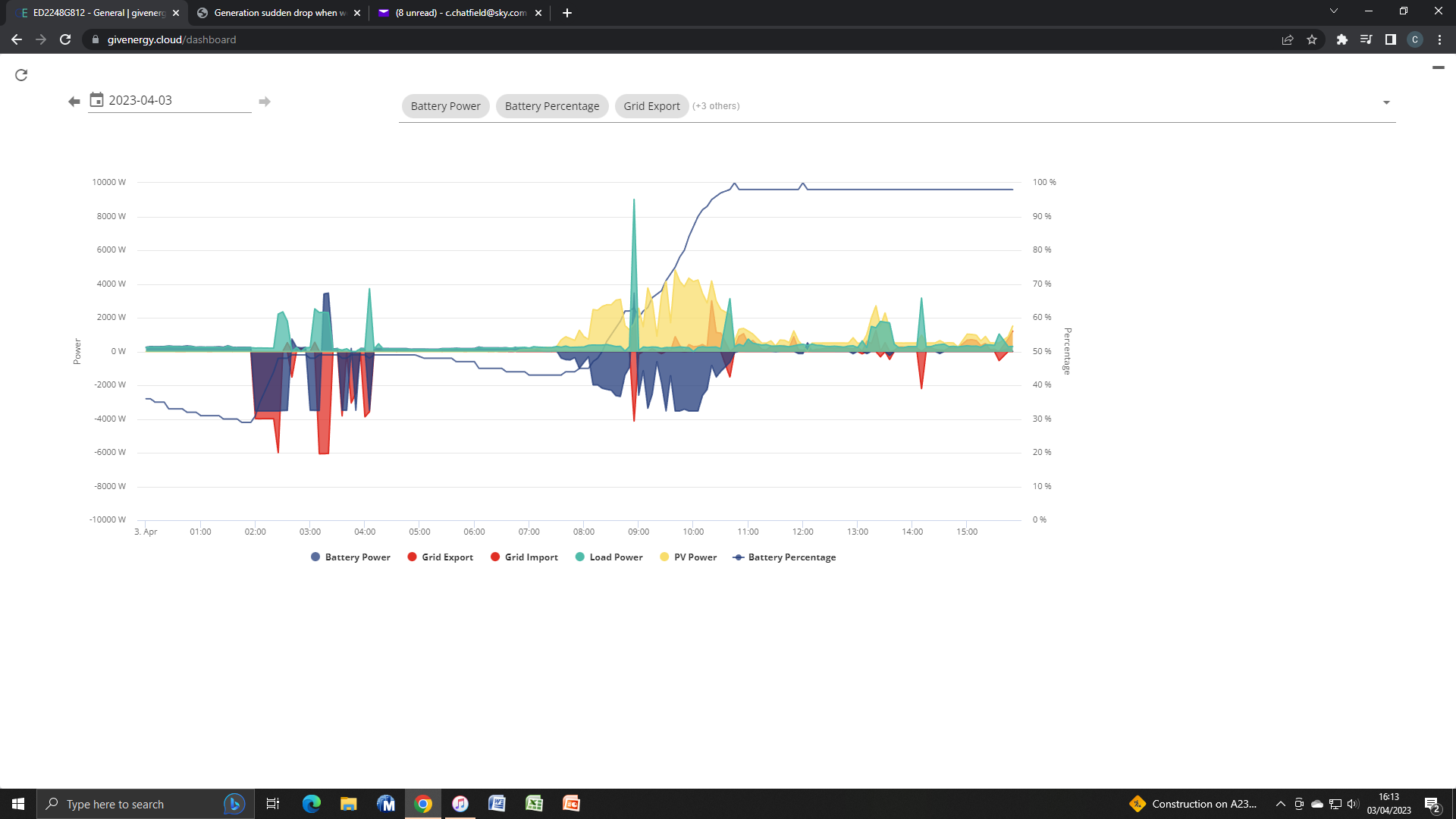
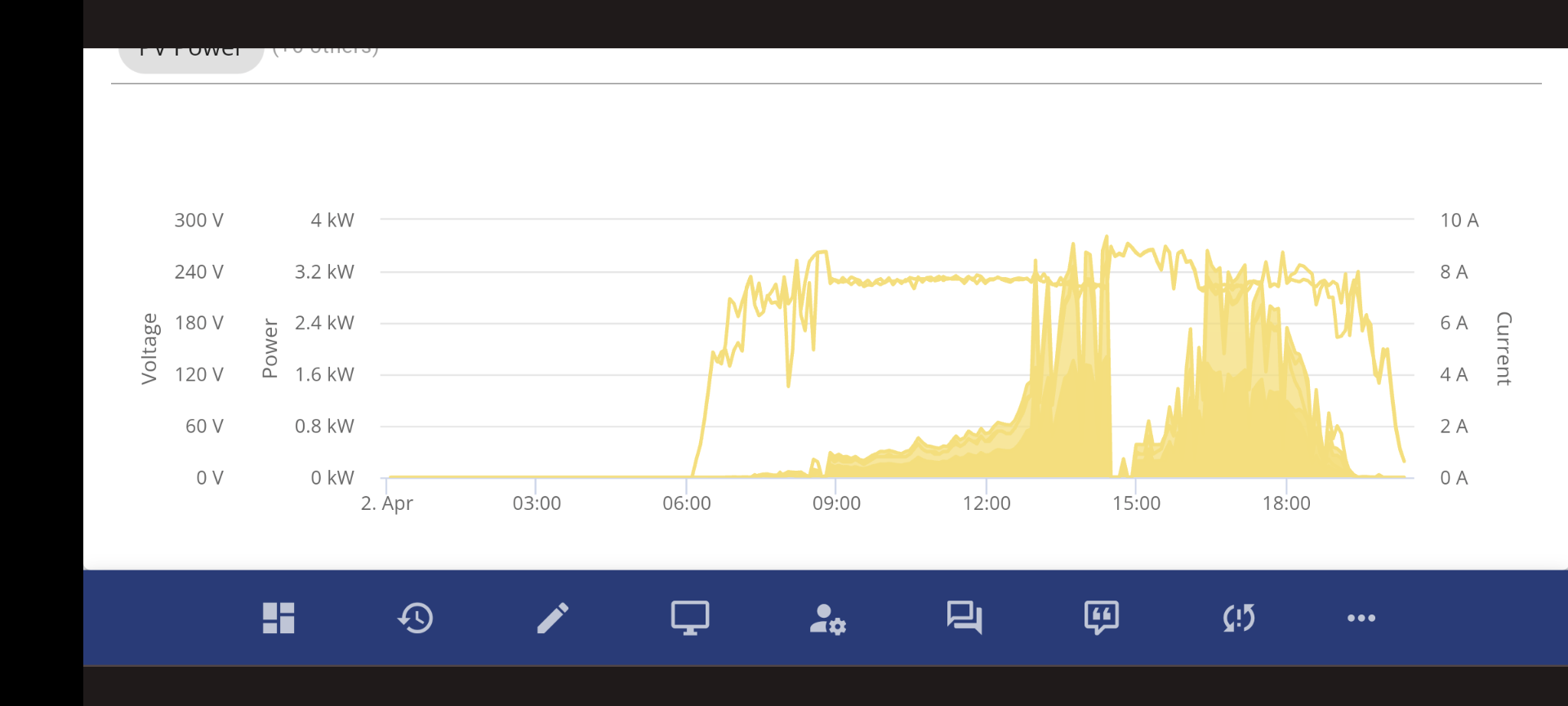
But at the same time, generation suddenly drops to close to 0w (like 5w or 10w) and then takes ages to get back up, like it's sunrise. But this is at 2.20pm on a west facing array and it's consistent good sunny weather.

I've (hopefully) added a screenshot of the PV graph which shows this at 2.20pm today, which is right when the battery jumped from 90% to 100%.

On days like today (with hopefully more to come) and now just on Flux Export, feels like ££ (probably pence really) slipping away.

Any thoughts gratefully appreciated!
![

Thanks

Michael

M
#3 michaelhoskins

Thanks. Pretty sure the DNO limit is 3.68kw, but as you say I'd expect it to carry on at that level once the battery is full rather than say 5w generating.

What do you mean by full power graph (with house and battery altogether like on the app?)

Thanks

M
#4 michaelhoskins

Ah, think I found it.

M
#5 Matt79

I have had a very similar experience.

South facing Array, fills the battery by 11:30 am with an increasing energy generation graph well north of 4kw, then once the battery is full the generation drops to around 500w. It then remains at this output until after 4pm where the battery starts to discharge and the generation jumps to 2kw + again.

The weather between 12 pm and 4 pm was better than in the morning so I would have expected a much better generation graph.

it is as if there is a controls signal stopping the PV from generating (or at least recording the generation)

M
#6 michaelhoskins

Yeah. I also wonder where the power is going, as surely the panels are still actually generating, but there must be something telling the inverter not to use it at all.

Will see how it goes over the next couple of (hopefully sunny) days.

C
#7 colinchatfield

I too have had a similar experiences....

Set up is 5.1Kw array facing SE. Gen 2 5KW inverter, 2x 5.2kw batteries.

Yesterday, great day for solar, batteries charged up by 11:00am at 4kw (ish) then sudden drop for the rest of the day until about 5:00pm. Then I was able to export some battery power to the grid (Octopus Flux) until 7:00pm.

So there seems to be a problem when the batteries are full,

The other 2 issues I have when the batteries are full are:

  1. Say I put on the kettle, I see the house demand go up, and this demand is met by the grid, and not my lovely full batteries. Doesn't seem to matter whether the batteries are charging, discharging or idle.

  2. When I try to export to the grid, it won't allow it.

If the batteries are below say 96%, then the batteries can export, but the amount is all over the place going, generally starting at 3.5kw, then dropping down, sometimes to <99%w., probably averaging about 400w. I was topping my batteries up overnight and the charge stayed at 3.43kw for the entire charge period.

This morning was much the same as yesterday, sunny day, loads of power being generated and filling up the batteries, then batteries full at 10:45, and the graph looks like the sun had gone in. Currently (11:30) blue sky, no clouds, and 702w being generated - batteries at 98%.

I was thinking that there might be something wrong with the inverter hardware, but as we're having similar problems guess it points to a software problem.

Does anyone else think that GE might be in cahoots with Octopus?

C
#8 cluelesscris

colinchatfield Both these graphs also show that the issue arises when the gneration hits the daily peak period. Is it perhaps over voltage from the strings? Take a look at the detailed numbers in your inverter data and see if you can spot any triggers.

C
#9 colinchatfield

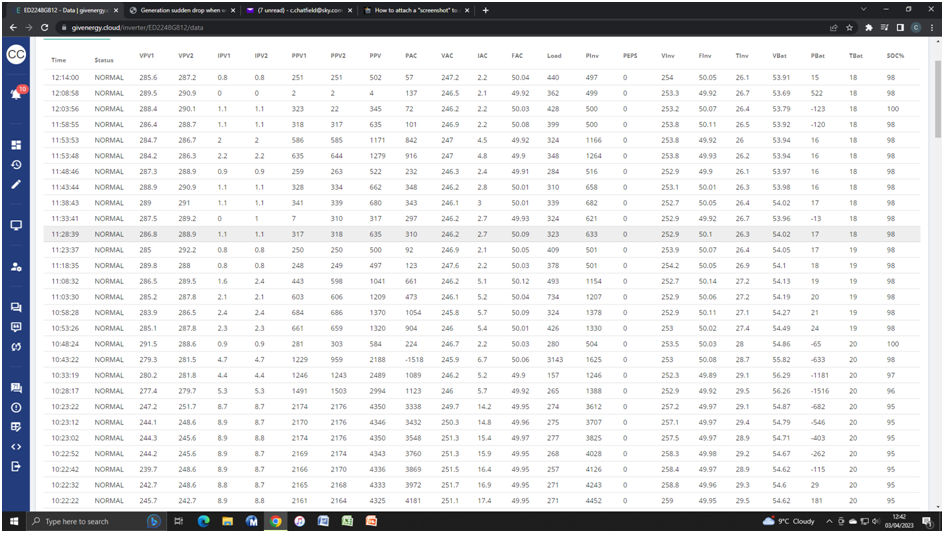
See below - sorry just numbers to me. Bottom of the screen is when full battery was achieved this morning (10:45), but I've also noticed this behaviour late afternoon when batteries have not been charged fully in the morning, and better weather charges the batteries up to full by say 16:00. I'm pretty much only getting problems when I've got full batteries.

You should be able to see figures if you re-size the screen.

C
#10 cluelesscris

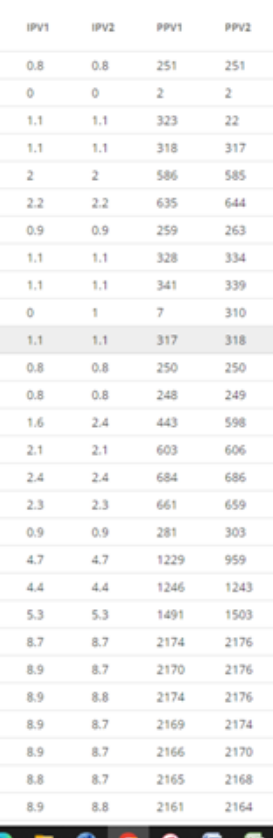
colinchatfield This image doesn;t really show a problem. If you look at IPV1 v IPV2 and PPV1 v PPV2 they pretty much track each other perfectly and the AC output follows the same curve.

Can you look at the inverter data covering the period shown in your first image 2-3pm?

C
#11 colinchatfield

cluelesscris
Not sure this was pointed at me - first post in this thread was from @michaelhoskins

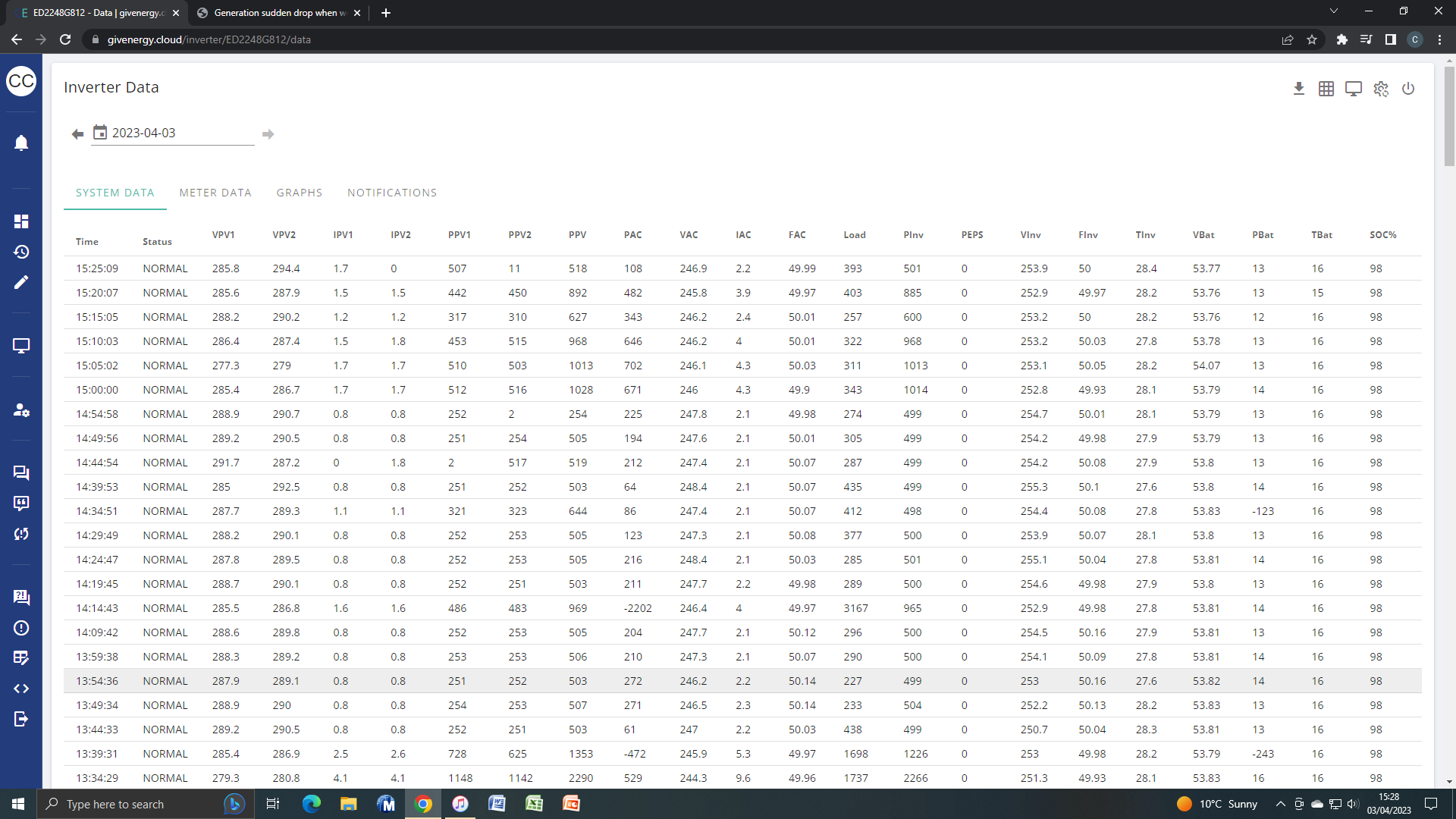
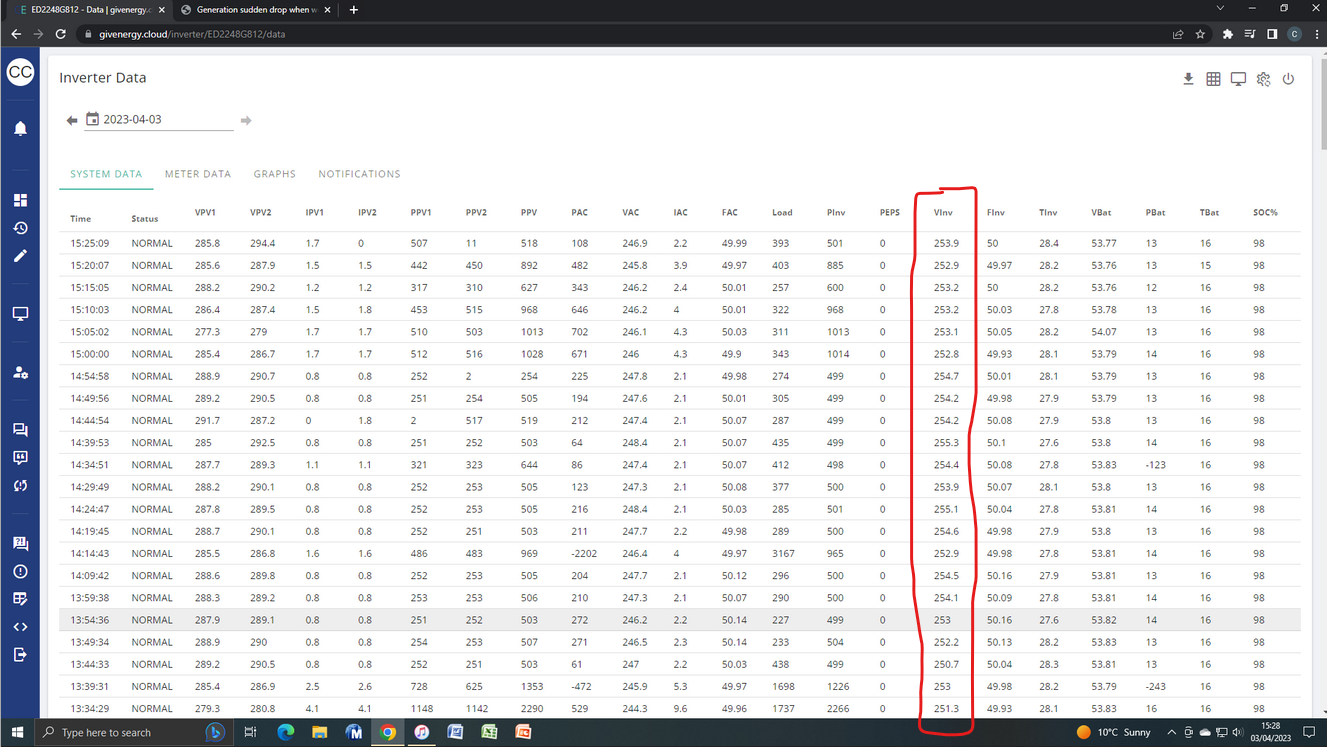
However it's now past 3pm so I'll post my data anyway

T
#12 Tim

colinchatfield Looks like your inverter is reducing output because of high voltage (253V+). We have a similar issue but the inverters aren't shutting down, just raising the voltage to export, causing the Zappi to trip.

C
#13 colinchatfield

@cluelesscris This pretty much demonstrates what's been happening today (much the same as yesterday....

So when the batteries are full at 10:45, solar input drops like a stone. Interesting is that at around 13:30 when we were doing lunch, house needed more power and all of a sudden, there was more available from the solar panels. Weather has been uninterrupted blue skies all day so far.

Currently battery still showing 98%, but power from solar has gone up to 1.3kw - 1.5kw, most of which is exporting to the grid.

M
#14 michaelhoskins

Looks like I've had the same issue today. Dropped to 5w generation just as battery full and then creeps back up. I'm away at the moment without laptop to get the full figures.

If it is a voltage increase issue, is there a fix or is it part of the design?

Thanks
M

P
#15 pacemaker

michaelhoskins will need to talk to your DNO I think about high voltage?

C
#16 colinchatfield

@michaelhoskins
"Part of the Design" - some might also call it a "Feature". 🙂
I've reported the problem of using grid instead of a full battery a couple of times to GE with not much response. Think they're currently waiting on China to provide a solution.
Sent a lengthy/detailed email this morning to their helpdesk - no reply yet. I noted therein that there were others having the same problem, and mentioned you as the original poster.

C
#17 colinchatfield

@Tim
I did mention high voltage to GE some time ago - they though it was all fine though.

Which column on the Inverter Data / System Data should I be looking at / and reporting to GE?

#18 Simon_C

colinchatfield , there is no point reporting to GE as the inverter is operating correctly according to the G98 or G99 requirements when connecting to the grid.

At 13:34 the inverter mains voltage (Vinv) was 251.3 Volts and the power of the PV (PPV) was 2290 Watts.
The allowed upper limit for the UK mains voltage is 253 V, and anything above that can start to reduce power output or even shutdown in extreme cases.

From 13:59 to 14:54 there is solid period with Vinv at or above 253 V, hence the reduced allowed power output of the inverter whether there is solar power present or not, with some recovery at 15:00 when the voltage drops to 252 V.

Your conversation needs to be with your DNO, and hopefully they will verify the high voltage and change the local transformer tappings to reduce it. My DNO did just that after 6 houses all within 50 m of mine all applied for micro-generation connections within around 2 months of each other. Before I was regularly getting 250 V+, now it averages around 240 V.

M
#19 michaelhoskins

Thanks. That's helpful. Is the inverter voltage rathe than PV voltage?

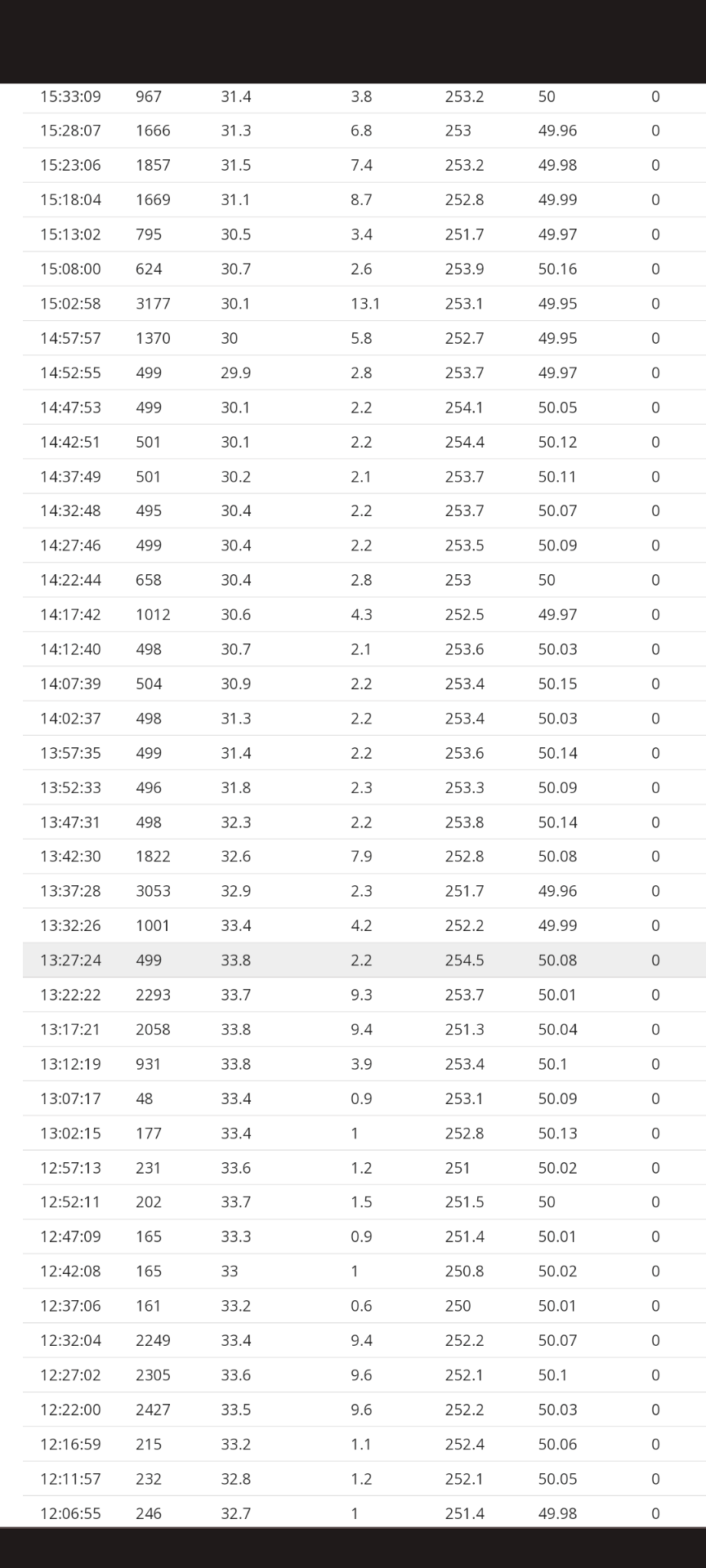
I checked the inverter voltage for today which is below. It happened about 1.30pm and I can see the inverter voltage did go above 254v then, just, but it is generally around 253v and seemed to rarely go below 250v.

So this would be something to raise with the DNO? Sorry if this is a bit basic, but do I just say the voltage in my area is too hight for my pv system to function efficiently and ask them to reduce it?

Cheers.

A
#20 Anomnomnomaly

I had this exact same problem for the first month after install.

I was also getting a lot of drop outs and missing data because the dongle kept disconnecting. For me, the generation was reporting just enough to cover what the house was using, plus a couple hundred w more. It would then export to the grid instead of charge the battery. So I'd be using about 500-600w and generating 700-800w... on occasion, close to 1kw. But if you told it to charge the battery... Generation suddenly jumped up... In some cases to well over 3kw... as soon as you put it back to normal... generation dropped back to just over what the house was using again over the course of a couple of minutes.

With me it was a twofold issue. The dongle was failing and eventually disconnected entirely and never came back, and a poor wifi signal.

One new dongle later and a wifi booster close to the inverter and I've not had the issue since.

The only other change I think that was made around the same time was, turning eco mode on. That ensures that excess power is sent to the battery first before the grid and draws from the battery to the house before importing from the grid.

Set a new record for generation yesterday (4kw+5.2kwh) of over 24kwh generated... and because we had an early night after a few hard days and used less power in the evening... The battery lasted until after midnight... No idea when exactly as givenergy servers appear to have gone down again... no data since midnight and 6am again.

#21 RHardie

michaelhoskins I had this same issue as you. I spoke to my DNO and they arrived at my house within half an hour. They accepted the grid voltage was too high and replaced the grid transformer in the village that same morning. Not had a problem since

M
#22 michaelhoskins

RHardie thanks. Just been trying to look at this a bit more from the portal data.

It seems my inverter voltage is often around 250+, but the grid voltage is much closer to 240v.

If it's the voltage causing the generation to be limited during what should be a good period, is it the inverter voltage or grid voltage that's the issue? If it's inverter voltage, how is that still something the DNO would deal with?

Thanks

C
#23 colinchatfield

@michaelhoskins
I too have been looking at the Grid Voltage vs Inverter Voltage and get the similar readings - Max Grid = 247.4V, and Max Inverter = 254.3V (just as a note - if you download the data into excel, you get the full column titles that than abbreviations).

GE emailed me yesterday lunchtime to say they were putting my inverter onto a Beta of the new software. Wasn't impressed by the changed this made with the house being run mainly from the grid since then. Called helpdesk at 08:30, and was told that only some of the update was able to be installed, and that's why it wasn't working correctly. Adding, we'll send you a file so you can do it locally. Might have saved a restless night if someone had had the courtesy to email me this info yesterday!

I'll update after the email arrives, and I perform minor surgery on the inverter with a USB Stick!

C
#24 colinchatfield

@michaelhoskins
OK, I've downloaded the files (2) onto USB and uploaded onto the Server - on the Gen2 (5KW) there's a couple of screws to remove to access the USB Port, and then behind this is a cover with the coms wires, 4x screws removes this cover (Careful with the wires), to give access to the dip switches. These (x4) have to be switched (towards the back of the inverter) to allow the USB to work - basically makes the USB port live, and disables the WiFi. Also, once the USB stick is inserted, the inverter starts emitting a high pitched continual noise/beep and this stops when the update is completed - about 10mins. Then can you put everything back to how it was originally. Not sure why my inverter needed a manual upload, but if your's does too, at least there's some info on the process noted above.

Once the WiFi had connected all seemed to be good. Did a few tests with the kettle and grill, which put the house load up to over 6Kw. It favoured using the Solar, then Battery, with a final top up from the Grid. After the test, it topped the battery back up to 100%, and now it's giving surplus solar production to the grid.

So the reluctance to give out power from the battery when fully charged, and the sudden drop in solar generation when the batteries get to 98-100% seems to have been resolved.

I guess you should be able to ask GE Helpdesk to get this Beta version, or patiently wait for the general release of the new version to the masses.

All in All, currently a good outcome.

L
#25 Leon_shaw

I have been experiencing the same problems with solar drop off when batter is fully charged on our gen2 3.6kwh inv. Spoke to GivEnergy and they said they are aware of the issue. They dropped back our firmware to previous version of both battery and inverter in the hope that this may help but it still I am still experiencing the issue. They did say they are working on a firmware fix for this problem and it has been reported multiple times as it became more noticeable since the weather has improved.