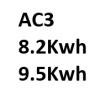
If the battery is charging in/under two hours (timed import), and I’m on a three hour Go Faster tariff, would it make sense to reduce the charge power?
Thinking if it charges slower, the inverter won’t get as warm? Better for the lifespan?
Anyone else done this?
#2hoggy
Been covered a couple of times: here
Personally dont see the issue as these inverters (& their sister designs) are fitted in Aus, Asia etc in much higher ambient temps but who knows, maybe in 10 years i'll be eating my hat for not doing so!
A
#3anabanet
Change the AC CHARGE RATE. Lowers the temperature. I intend to keep these for more than 10 years.
A
#4andrew_bond
Put a small fan under the inverter - then you can fill your boots charging even on a hot day.
A
#5anabanet
I have done that! With a little 40 degree themo switch!
I got a USB fan, cut the wire and soldered in a thermoswitch. Thermoswitch sits on the top of the inverter, fan sits below the inverter tied to the fins.,,,, and when it hits 41 degrees, fan on.
A
#6andrew_bond
anabanet Mine's a bit less automated - just a timer switch that kicks in during my GoFaster charge period - but it's very effective at controlling the temperature.
A
#7anabanet
H
#8hamilton
I do charge mine at 2kw and it does reduce the battery and inverter temperature peaks. The problem you have is that it also limits the charge from the sun.
Hopefully they will split it into 2 different charge types
T
#9TX200
Unfortunately for me, that’s not a problem 😄
My solar array is small and a few years old and thus setting the slider to 2/3rds wont impact solar charging.
The array came with the house, so it’s not all bad, didn’t really cost me anything.
Maybe one day I’ll expand it, but for now it’ll do.
K
#10Kryten
While I await my install, out of interest how hot do the inverters get? Thinking the AC3.0 model specifically. Plan is to install in the house where temp is 19 deg but may get up to 25 in the summer. My thought process is this would be better for the batteries but is this going to be bad for the inverters performance? Other option is garage which gets down to 0 degrees in winter.
T
#11TX200
During charging my inverter is showing a temp of 53c or 46c with the charge rate reduced (from the GivEnergy stats)
The un-heated (large cupboard) it’s in has got to 23.6 or 21c with a slower charge.
The cupboard temperature drops to 19c minimum most nights, once to 18c and once to 17c (both days the unit didn’t need much charging from the grid due to solar input during the day)
I tend to leave the cupboard door open whilst it’s charging, but will sort some proper air vents out soon, and maybe a small fan as mentioned elsewhere.
#12THALL
TX200 My system is outside, and my ac3 hits 53c! So seems normal range inside or out.
T
#13TX200
Just noticed my inverter was charging at full power, despite being set to 1.6kW
Pressed the submit button again and it’s adjusted back down to 1.6kW
Think someone on here might have mentioned a bug around this or perhaps around charging capacities. Guess it is a beta portal anyway.
A
#14andrew_bond
My AC3 inverter is in the garage. I found it was hitting about 64C in the summer, especially if I'd driven the car a distance and put it away hot. When it hits that temperature the charge rate drops to just over 1kW until the temp drops again. With the fan fitted, it was peaking instead at 45C - so no throttling since fitting the fan - I'm charging at the max rate for a little under 3 hours to fill the single 8.2kWh battery (100%DoD).
K
#15Kryten
Sounds like some fans over the inverters could be useful then as discussed in another thread. I am having 3 x AC3.0 each with their own 8.2 battery so could get quite warm as planning to fully charge in the 4 hour night off-peak rate.
#16THALL
andrew_bond I am starting to think a fan would be a nice addition, maybe GE should make one with a thermal sensor to come on at X temp. Or maybe someone on here wants to make a bunch and sell them 😉
G
#17GrahamRead
I assume the temperature the AC inverter reports is the internal board temperature - there's some pretty large heat sink fins on the back of the inverter, and I assumed an internal fan to aid cooling - I can hear something running when it's under load and the heat exchanger is noticeably warm. How much an external fan blowing on the heat exchanger fins would help reduce the internal board temperature by, I don't know. Depends on the efficiency of the internal heat transfer I guess.
I know my SBA Inverter has an external fan fitted, as I can see the air movement in the cobwebs around it :-)