Unaccounted battery usage

9 comments started 2023-09-11 last 2023-09-11
GivEnergy ProductsHybridBattery
R
#1 rsarwar87

Hi,

Just finished commissioning our system last week in the middle of the high-pressure weather system (FA2308G859). I think all went all, but I am trying to understand the data I am seeing in the system.

I got 9 x 415 panels in single string on SWW roof. 3.6 kw inverter gen3 and 5.2 kw battery. Last Saturday, I generated 14.5 kw of energy peaking at 2.6 kw. Given the high temp and time of year, does it sound reasonable?

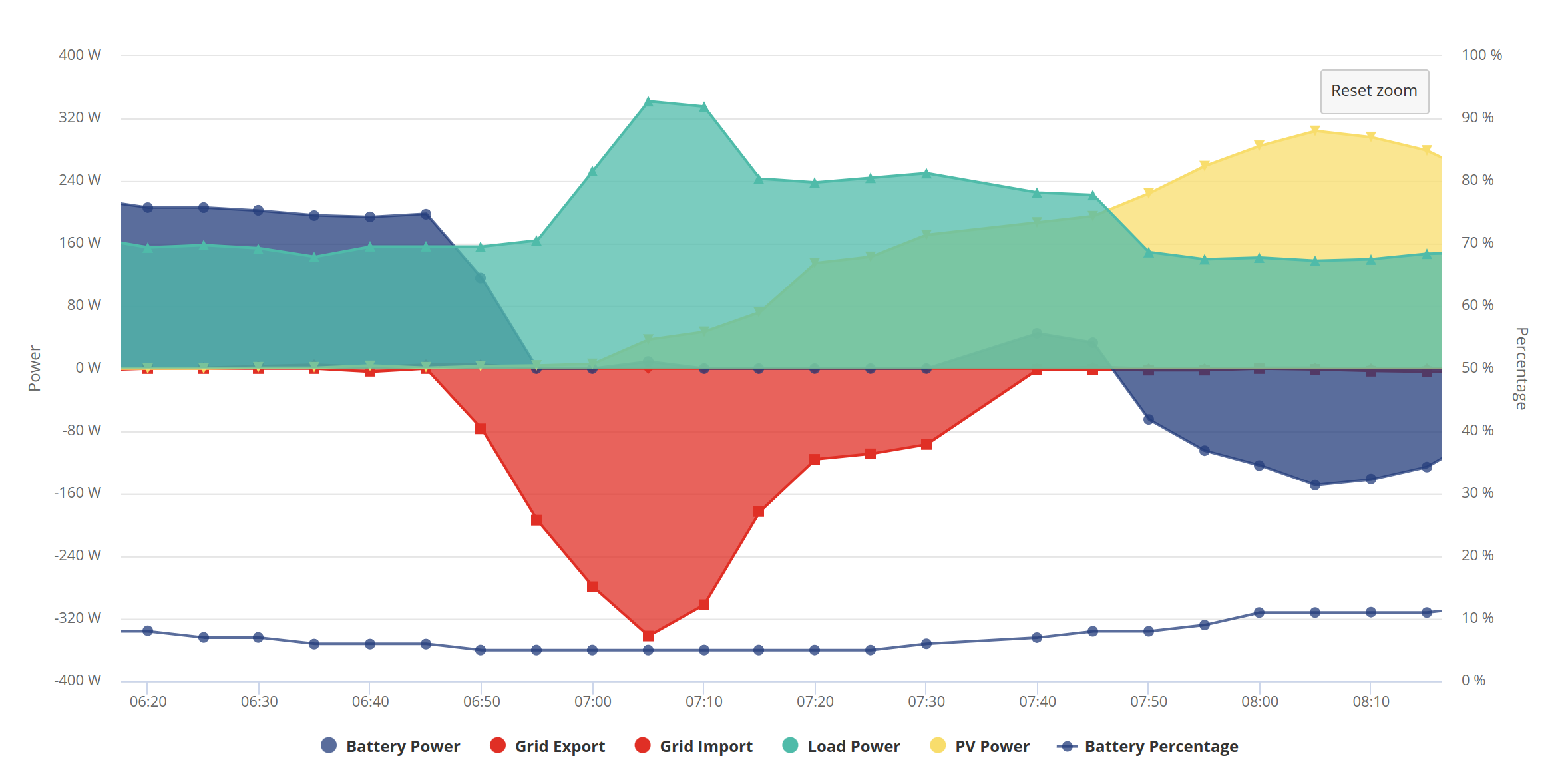
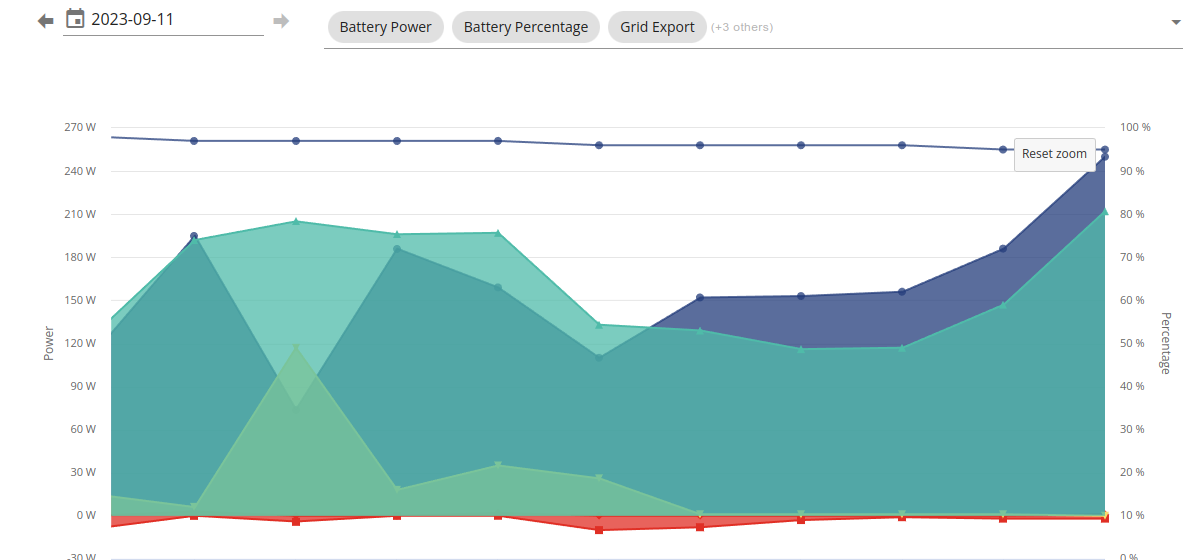
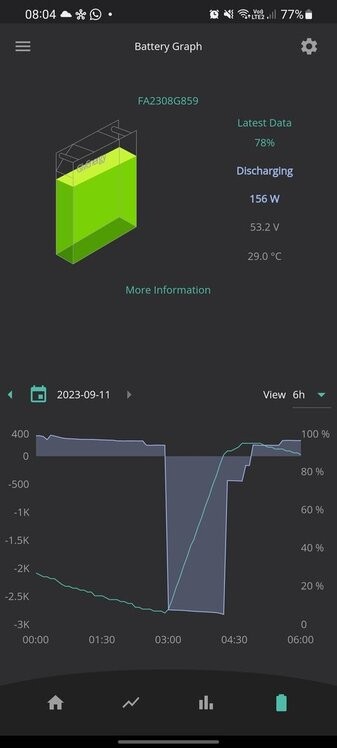
Prior to installing my usage was between 4.9 and 5.5 kwhr a day, if we had no dishwasher/oven/washing machine running on the day. So it came to me as a surprise that on a similar usage, by battery goes from 100 pc at 6:30 in the evening to 9 pc at 7 in the morning. So I started digging into the numbers and realized that the battery power draw is 10 to 20 pc higher than what the house actually demands, e.g. 300 w drawn from battery when the load was 250 w; and 3.25 kw drawn from the grid when charging the battery with the home load at 3kw. Do we know why? A DC to AC conversion loss of 10 to 20 pc seems high to me; I was expecting 5 to 6 pc according to the Gen 3 spec sheet.
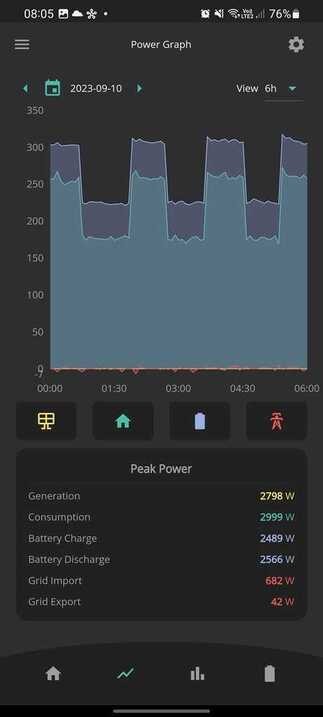
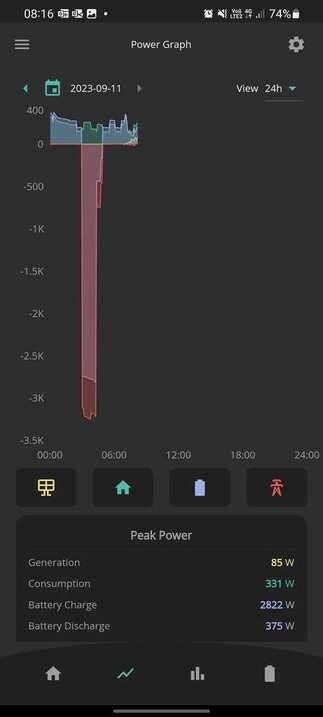
Given that I got a Gen 3 inverter, I am wondering why I seem to be limited to 2.6kw of max charge/discharge power. Was wondering why, as I expected 3.6 kw according to the datasheet.

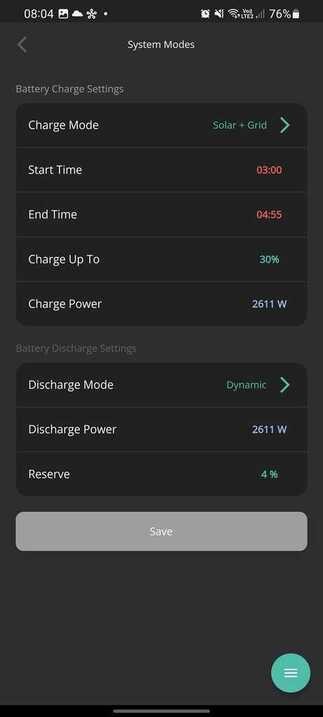
Also last night I changed the battery settings to charge from the grid between 3 and 5 am but only up to 30 pc. I expectation was that it would charge to 30 pc and then hold that energy till 5 am. But the system seemed to have charged all the way to 100 pc or till it the end time. Any idea what settings I might have missed?

Finally, does anyone know how to make the inverter hold the energy stored in the battery and not discharge to the home or the grid, I.e. use the grid to power the home instead?
#3 Cdent

rsarwar87
on Saturday my peak was around 2kW from 11x 405 panels split east/west- I think the heat definitely had an impact as I've seen almost 4kW previously.

the battery will put out more as you say due to the conversion loss, it'll also run the inverter as well which will vary based on the demand. Conversion losses of 10%-20% are reasonable (15% is average) but at lower power the inverter losses are higher.

for the battery charging, the 5.2kWh is limited to 2.6kW of charge, the larger batteries can take the full 3.6kW from the inverter.

I'm not sure about the charge to but I believe I read somewhere that there might be an issue with gen 3. As for holding the energy, not sure if there is a pause button on the app you can use, I know there is on some inverters.

R
#4 rsarwar87

Cdent
Thanks, yes just spotted that the battery is rated at 50 A, so 2.6 kw is what it is rated at, although not explicitly mentioned in the datasheet. A bit cheeky, but I guess with only 5.2 kw, running an oven + heat pump is not really what it was designed for.

but a 10-20% conversion loss is on the higher end of what I would have imagined to be fair. The datasheet suggests 5% -- I am curious under what condition this figure was achieved, I hope not at 5 kw @ 10 C.

simont
Whilst I don't seem to not have it as bad as you, I would be upset too about it if it was that bad - but i am a bit taken aback to be fair even at 50w -- it increases the payback period as charging during off peak is 20 % less attractive

It's definitely not a measurement difference. Nor is it self-consumption as then it would be constant at all load conditions. Has it gone down for you since with firmware update/calibration?

the math adds up here, when battery ran out:

S
#5 simont

rsarwar87 No, it was earlier than the firmware upgrade to 3013, although someone on here has this issue after the upgrade and has done a manual downgrade to 3012 and sees an improvement

Bear in mind the 5.2kWh battery is only 80% DOD so you'll only be able to charge it with 4.16kWh.

R
#6 rsarwar87

simont @20% efficiency, its actually a 3.4 kWh battery

and it takes about 5kwhr to charge from the grid. That's a 70 & overhead/loss for anyone trying to reduce the payback period

S
#7 simont

rsarwar87 Not 20% efficiency, 20% DOD so only 80% of the battery is ever used ?

M
#8 MarkyG82

The settings you are using look fine for the overnight charge. I would, however, recommend you use the GE portal rather than the app. There has been many comments of settings on the app not taking but the portal seems much more reliable. Go to the inverter page on the portal and reset the settings then turn on ECO and then set the charge. Save the settings at each point.

R
#9 rsarwar87

MarkyG82 that is a good point. i will try it and see how it goes.

simont i was on the phone with givenergy regarding a different issue and i took the opportunity to bring up the extra draw on the battery and he looked at my inverter and just said "i fixed it". i reckon he probably toggled a switch to remove internal losses from the calculation, so now the math all adds up. but i am sceptical that what he "fixed" was what and how info was presented

EDIT: it seems the guy did not actually manage to break physics. The correct values are reported on the web portal, which shows the same inefficiencies. what a shame, he just missed out on a Nobel prize.
Now i have to spend another 30 miniutes tomorrow to call them back and turn off the gimmick