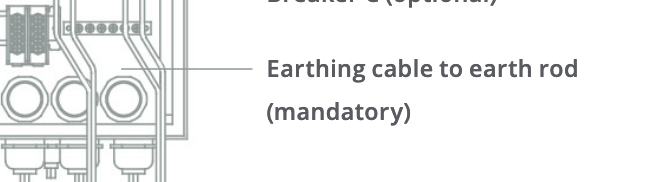
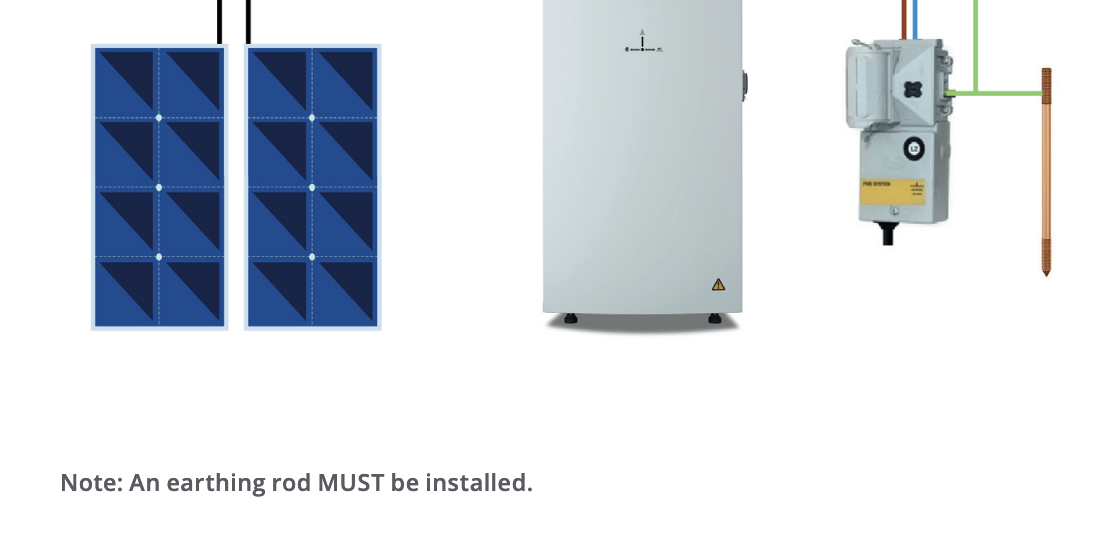
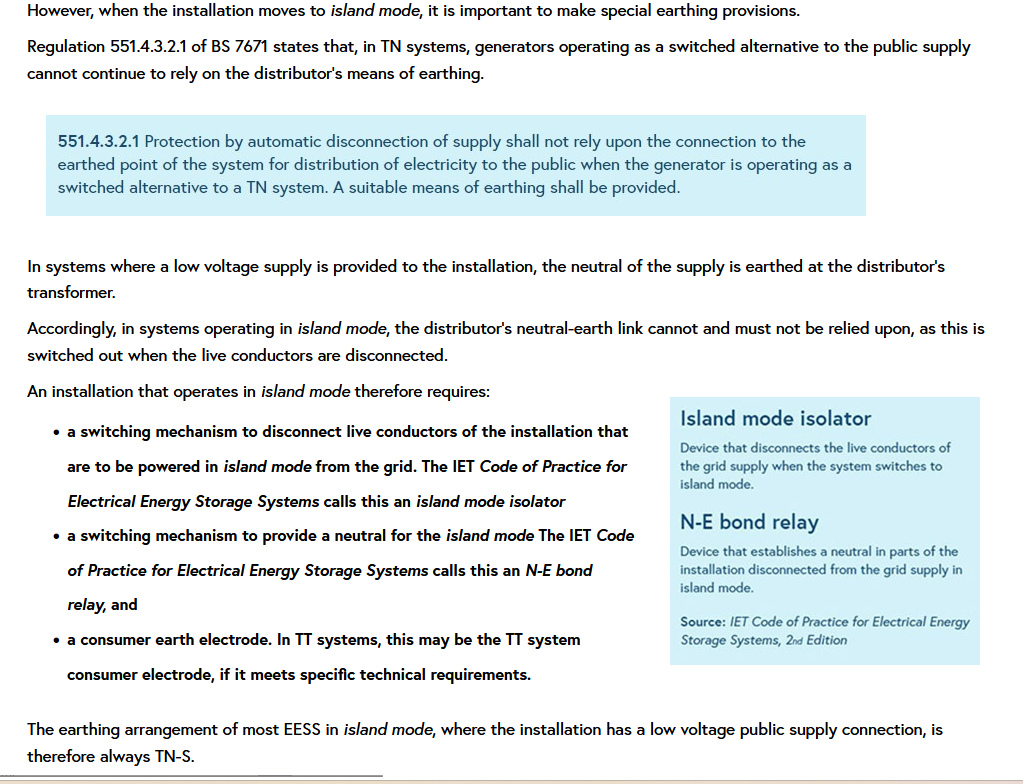
What people don’t understand is there are only two wires that come from the grid. If the grid goes down then there should be no power coming from your house back to the grid (especially if there are people working to get it going again. The GW stops any power going back to the grid therefore an earthing rode is required.
In the UK, only two wires — live (line) and neutral — typically come into the house from the utility grid. However, this system is part of what’s known as the TN-C-S (PME - Protective Multiple Earthing) earthing arrangement, which is common in the UK.
Here’s a breakdown of how it works:
TN-C-S (PME) System:
Live (Line): Carries the incoming electrical supply’s voltage (typically 230V in the UK).
Neutral: Returns the current to the grid and is also connected to earth (ground) at multiple points, including the substation and at the point of entry to the house.
In this system, while only live and neutral are physically supplied by the utility, the neutral is earthed (grounded) both at the substation and at the property. This connection allows the earth connection in your home to be made locally, using the same point where the neutral enters the house. This is why, even though only live and neutral come into the property, there is an effective earth connection available at the consumer unit (fuse box).
Earthing in the Home:
Inside your home, you will have a separate earth (ground) wire connected to metal parts of your electrical system and appliances. This earth wire is connected to the neutral at the main consumer unit, providing a safe path for fault currents.
In summary:
Only live and neutral enter the house, but the neutral is earthed at the point of supply, creating an earthing system for safety.
The house has an earth wire within the internal wiring, even though it doesn’t come directly from the grid but is bonded to the neutral at the supply point.