Hi, looking for some advice please. We are at the stage of approving a design including 5.5 kwp east facing with 4.4kwp west facing panels, 19kwh batteries and the gen 2 5kw hybrid inverter. Given that the array is split, is that inverter big enough please?
Cheers
A
#2anglefire
Being split east and west you will never be running full power on both strings at the same time. I doubt you will be able to charge both batteries using the different strings efficiently all year round. I have 4.5kwp evenly spilt south/west (slightly west actually) and my south string comes in big time from about 10am. The west string doesn’t come in until about 2pm. About 4 the south is dropping and the west still doing well. In the winter the west doesn’t do much as there is a building which cuts off the sun and anyway the sun doesn’t really come around enough.
An east string here would come in early but probably off peak by 12.
With one inverter on the two strings you would charge the battery all day.
Two inverters one per battery may leave one battery or the other discharged and the other full.
Having said all that it might give you higher capacity off battery when they both have charge.
S
#3sponev
Thanks for that. May have been a bit confusing in that it's a single 5kw gen 2 inverter, not 2 inverters. So I'm hoping to charge the batts all day. That said, the batts should really help during winter to take advantage of an off-peak tariff.
My unscientific checking of the sun here suggests I should be good on the east array until shortly after noon, with the west side ramping up from 1pm ish. Yesterday we still had sun on the west side until 7pm ish. We also have zero shading so I'm hoping for some decent performance when it eventually gets installed (a few months yet).
What will be particularly interesting is to see what happens as the sun transitions around the south side. I'm hoping that the max generation will never really get too much for that 5kw inverter - I think we should be OK?
T
#4Tim
sponev the batts should really help during winter to take advantage of an off-peak tariff.
With a single gen 2 inverter, you would only be able to charge at 3.6kW (I think). If you have a 5 hour off-peak window, you would be able to put 18kWh into the batteries. If that's enough to keep you going until the next off-peak window, then you're quids in.
As regards the PV orientation, ours is (a bit west of) south-facing but, at this time of year we see generation from early morning (before 8am) to evening (after 7pm) as long as the clouds are high and the sky is bright. The generation is enough to support the background house load of 300-400W. I would expect both of your strings to also provide some output with a bright sky, even without direct sunlight.
L
#5Lmcde3
Hi. Solcast will allow you to put both of your arrays into the system for free - once youve done this you can download an estimate for each array and by combining the two figures you will see how often you're going over 5kw and likely to clip. That will help you make your decision 👍
A
#6anglefire
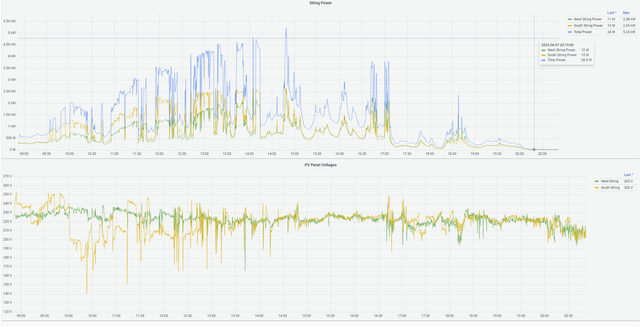
We are currently (19:20) generating 800w off the west and 200 off the south. Roughly. But was doing a fair bit more earlier - some spikes over 5kw.
So yes on a good day you should have some good generation - and as said you can pump an extra kW into the batteries. The 5kw hybrid inverter can do 5kw into the house and 3.6kw into the battery so more than capable of supporting your arrays. I would say anyway.
A
#7anglefire
Sun has come out again and now doing 1.35kw 🤣
#8THALL
Are the roofs perfectly East West or slight off? Very off? My house has 2.4kw of panels East facing on a 2.5kw inverter at 100 degree's and 4.62kw of panels on a 5kw inverter West facing 280 degree, roof slop is 45 degree's. I see spikes as high as 5.4kw in total. The spikes do not last long, but I do see sustained 5kw on clear days. I think you will see the inverters max 6500w around midday.
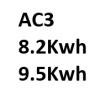
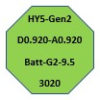
I have an AC3 to manage my 8.2kw battery but I have ordered a 9.5kw to add to the system. Unless you need the batteries charged faster a single inverter will be fine. Or if you want more house load on the batteries then you will want a second inverter, 1 per battery for a nice 7.2kw output. For me I find the 3kw output of my AC3 is fine for my home. There are very few times the ASHP and oven are on together etc. I am not trying to go off grid and do not mind paying a little for grid power.
S
#9stevelewis
anglefire Two 3.6kW inverters, one per battery. Split each of the arrays into two strings and feed one East and one West string into each inverter.
9
#1094jdh
stevelewis
That's what I'm having installed, sponev was also considering this but there has been some confusion over how successful two GE inverters work with nicely with each other. ( I think someone on here does have this set up running well as far as I know).
S
#11sponev
Thanks for the replies, very useful. I'll give that Solcast tool a try tomorrow, learning all the time! With regard to the question about roof orientation, we are just a few degrees off true east/west.
I think what we've specced sounds about right from the feedback and I reckon it will make a huge difference to our grid requirement. I've been monitoring the house usage over the last few weeks and the 3.6kw max draw should be fine most of the time - there will be peaks (kids electric shower!) but we can manage the rest with a bit of careful scheduling.
Thanks again, we'll move forwards with a bit more confidence.
A
#12anglefire
stevelewis I'd not even considered that - that's a good shout!
M
#13makse
94jdh I have a 5 and 3.6 setup. They work but can confuse each other. the portal and app data/graphs dont add up due that.
I can't talk about batteries as still waiting on them.
GE are working on a 'EMS' unit for central load management of multiple inverters.
T
#14Tim
94jdh some confusion over how successful two GE inverters work with nicely with each other.
We have 2 gen1 HY5 hybrids which must have identical calibrations as, even though they are not connected other than by the 240Vac, they seem to load share in amazing sync. I think the issue is with AC3s which are connected to the 240Vac as well, but which are supposed to be connected over Modbus with one of the AC3s as master and the other(s) as slave devices.
In fairness to Givenergy, the range of different plant setups must be a real headache for them to develop firmware which caters for all use cases.
#15Simon_C
I have an almost exactly East/West roof layout, and am in the process of sizing the PV arrays and inverter.
Using the PVGIS-5 online database for my street location in the UK Midlands and a roof slope of 30 degrees, predicts the following clear-sky irradiance (W/m2) during June:-
Time 11:00 13:00 15:00
East 910 790 510
West 460 754 903
By my reckoning the peak total output is at 13:00 BST, with close to 800W/m2 on both arrays.
The solar panel data-sheet usually indicates an alternative power output called Power(NMOT) at 800W/m2, so I just multiplied this figure up by the number of panels to get an estimate of peak power output on a clear June day.
I am sure there are other more official methods of calculation, but this seemed to be logical to me for an East/West roof.
A 390W panel, may have an NMOT power of around 300W.
14 x 300 = 4200 W
12 x 300 = 3600 W
Total = 4200 + 3600 = 7800 W, which seems a bit high to me for a single 5kW Hybrid Gen2 inverter, though others may say otherwise.
#16Simon_C
stevelewis
An internet search reveals a research paper on this scenario with an East/West split on 1 string, and it was only close to the performance of 2 strings split East separate from West when the East and West arrays were matched in size (number of panels) AND the roof slope was shallow at around 10 degrees.
Not sure this matches with the 2 array sizes by the OP.
#17Simon_C
There is a separate thread already in place about having multiple inverters running in parallel, which seems problematic for those discussing.
Simon_C I was suggesting East and West on separate strings, 4 strings total into 2 hybrid inverters. That way, both inverters get to see a longer generation period to charge batteries and/or power loads. The benefit increases with roof pitch. The two inverters would also accommodate more batteries for overnight charging at a later date.
S
#19sponev
Simon_C That is slightly worrying if correct. I have no real experience with this but I would have thought at 1pm, the sun would be south (ish) and straddling the arrays - so not at max generation for either of them? The east array would be significantly dropping off with the west array starting to ramp up? I may be way off there of course!
I set up two separate arrays on Solcast and I'll revisit the history to see what the projected max numbers would be either side of midday.
Apologies if I've misunderstood your calcs.
If anyone with an east/west split array can indicate what happens in terms of generated power as the sun transitions southwards, that would be great!
Cheers
S
#20stevelewis
sponev I have a SE array and a SW array. Roof angle 45 deg. It's a you say, at noon the SE array is past its peak and the SW array is approaching peak. https://pvoutput.org/intraday.jsp?id=18903&sid=16752#... select the insolation link in the centre of the page.
#21hoggy
Sure GE have said its the string voltage that's the limiter not the total panel power (580V Gen1 or 600V Gen2).
If there's spare beyond what the Inverter can utilise (DC-DC & DC-AC) then MPPT just moves the power point to sub-optimal level & the panel output is pulled back.
(I have a the ability to inject an additional 2.5kW of "fake" PV into one of my 2x3kW strings and can confirm that with both arrays already running at full capacity the additional 2.5kW just sits there doing nothing)
9
#2294jdh
stevelewis
That was my view and how it's planned to be set up. I suppose I'm my case, 18 panels, you could have 6 East and 3 West and visa versa to minimise that noon issue?
I wanted the two inverters for exactly that issue of charging two batteries cheap night rate in winter time.
That last post of mine didn't read correctly ( or make sense!!) - my concern is more in relation to a nice sunny am, but then a poor afternoon - would it be better for the batteries to have a mix of East/west ( my two roof areas are 12 panels and 6 panels, both equally split east and west).
I'm wondering if it's best to have two strings from each roof area, and then mixing to each inverter to have 6 & 3 orientation?
S
#25stevelewis
94jdh Agree. Something to consider in your case is whether the voltage across a string of only 3 panels is sufficient for the inverter to start and track.
#26Simon_C
sponev
That is the point I was trying to make, that the peak total power from both East and West arrays occurs when they are both receiving around 800 W/m2.
Each array individually has a higher peak at around 900W/m2, but at that same time the other array irradiation has dropped off significantly to around 500 W/m2 which does not provide as high a total power.
This applies most accurately when the East and West arrays are the same size. There will be a time offset from 1300 BST with different size arrays.
S
#27sponev
Simon_C I'll try to do some more checks but I was surprised to see such relatively high power generation on both arrays with the sun southerly. Clutching at straws here but did your calcs take into account the panel efficiency? I'll take another look at the Solcast models I set up to see what they suggest. I stress that I'm just at the start of this journey so I may be way off! Really useful to compare notes though as comms with my supplier is pretty poor at the moment.
#28Simon_C
sponev
It might be down to my roof slope of 30 degrees. A steeper roof slope may well produce a different power curve for the total output.
I only did the calcs to get an idea of what the peak output would be on a perfect clear sky day in June.
So many examples of PV and inverter sizing seem to only cover South facing panels, so I knew with an East/West split I would need more panels to achieve the same peak output.
#29Simon_C
94jdh
My understanding is that mixing East and West panels on the same string is not a good idea, assuming the panels are all connected in series.
With a series connection, all components must pass the same current, so if a panel on the sunny side is trying to pass say 8 Amps, and the shaded side 3 Amps, then what is the result?
9
#3094jdh
Simon_C
I was thinking of two separate strings, one for each (east and west) as both inverters have two inputs.
My installer currently has the design as 12 panels feeding one inverter on two strings ( 6 East and 6 west) from one roof and 6 panels feeding the other inverter ( 3 east and 3 West) on one string.
This gives a sizing factor of 131% for one inverter and 66% for the other, which to me seems unbalanced?
Any thoughts would be appreciated.
S
#31sponev
Simon_C I've just checked a little further and also managed to speak to the supplier. I see on Solcast that the max combined performance over the last 7 days from the E/W arrays mentioned earlier was around 6.5kw. We did have some sun in amongst the rain!
My supplier is also now saying similar to what you suggested in that the inverter may be too small (clipping?) for the specified arrays and that we may need to trim back on the panels or look for a different manufacturer. Given we are 8 weeks into the process I'm not too happy about this!
Do I trim back the number of panels, accept some clipping at peak times or start the process again with new kit? Any suggestions welcomed please as it's getting somewhat confusing. Balanced arrays, 10 panels each side, looks a better match but then we're not maximising the roof space - however the current proposal looks like a chunk of generation would have been wasted anyway.
Thoughts appreciated.
9
#3294jdh
sponev
It sounds as though you could do with going back to twin inverters but I know you've concerns with that.
S
#33sponev
94jdh Certainly food for thought but I think stepping back slightly on the number of panels is likely the way forward. We're too far down the track to start switching equipment I reckon. I'll keep you posted. My other concern is giving the supplier another excuse to push us back in the queue!
You can reduce your PV and avoid clipping on bright sunny summer days, but come autumn, you may be wishing you had a few more panels to capture what light there is.
Our PV is way too much for our needs with clipping as soon as the batteries are fully charged (usually before midday) even when exporting at 3.68kW. We regularly export 20kWh/day. The car goes on charge in the afternoon as well as the dishwasher, washing machine and anything else we can usefully do. However, I have no regrets on the decision to cover the roof as we have been self-sufficient since early February and hope to continue late into the autumn. Time will tell exactly when we will have to swap our single rate EdF EV tariff to the TOU dual-rate tariff to charge batteries and car overnight.
I respect that there are those who spend the time to work out whether the cost is justified by a reasonable rate of return. Our sums were somewhat simpler, we made the decision to install PV when energy prices were going to jump 40%. The plant size broadly didn't affect the cost of installation (scaffolding and labour), just the number of panels, inverters and batteries. The more we have on the roof, the more days/weeks we avoid importing energy from the grid. Either the cash stays in the bank devaluing at the rate of inflation, or we put the plant in service and save on our energy bills for the next however many years. I do recognise though that we are in a very fortunate position to be able to move cash from the bank to the roof. It hasn't always been like that but many years of work and saving are now paying off.
#35Simon_C
sponev
Another consideration with the East/West split of arrays is that in Winter the generation drops off to lower values than a equivalent rated South facing array. My calcs using PVGIS-5 indicate an average 20 kWh/day in May/June/July, but only 3 kWh/day in December for the East/West split.
In December you will be glad of the extra panels, even though you may have clipping in the peak Summer months.
S
#36sponev
Tim We are in a similarly fortunate position and it's not so much the cost as the engineering suitability. I totally understand your point about the duller days and I've asked the supplier their opinion on the best balance. We have an EV and a power hungry home office, so plenty of capacity for the solar generation - but only where the inverter can actually fulfill that.
I was working on the general advice to stick as many panels on the roof as possible but if the power is simply dissipating as heat or however an (undersized) inverter deals with it, then not great. Although the extra benefit on cloudy days may make up for that? I was hoping that the supplier would be a bit better at advising me on the best balance but the feedback at the moment is not great. Thanks for illustrating what you went for and I'll hopefully finalise on something soon.
S
#37sponev
Simon_C I'm starting to lean that way. If "clipping" doesn't mean overheating or anything else adverse, I may as well stick the extra panels on. How does the inverter "ditch" excess generation please - forgive my ignorance but the energy generated tries to go somewhere? Heat? Or does the whole system somehow ramp back? No doubt I'm making a few of the experienced folk chuckle with my noob questions 🙂
#38Simon_C
94jdh
I would echo the reply by @stevelewis about 3 panels on 1 string potentially not providing enough voltage to start/trigger the inverter.
The GE datasheet for the Gen2 inverters indicates a start-up voltage of 150 Vdc, and MPPT tracker range of 150 - 550 V.
3 panels connected in series on 1 string may only produce around 120 Vdc depending on the solar irradiation levels and loading conditions. Other brands of inverter have a lower start-up voltage, which your installer may be used to.
Does your design have 9 panels on each East and West roof, with no potential shading issues? If so, it could be possible to wire with strings of 5 and 4 rather than 6 and 3.
9
#3994jdh
Simon_C
Hi, one roof has 6 east and 6 west, the other 3 east & 3 West - so the design shows the first roof with 6 east panels on one string & 6 west on the other string for the first inverter and battery one. The second roof is only running on one string 3 east and 3 West on the second inverter and battery two.
So I'm a bit of a loss as to what is best - running all west on one inverter and all east on the second inverter but does that add the extra dilemma of unequal charging of batteries if the weather is good in the morning but poor in the afternoon?
There are others (shout out to @hoggy) who can answer this with more authority but this is a question I asked of our installer before we took the leap. He said that the panels do get hot (because the sun is shining on them) but that they don't degrade simply because they are hot. He said that they often put panels onto the roofs of new builds and it's months before they connect inverters. My understanding (happy to be corrected) is that if demand on the inverter is less than the available PV, the inverter reduces the current drawn rather than dissipating energy produced by the panels as heat. That's not to say they don't get hot, they do (just as the greenhouse gets hot), but from heat radiated from the sun rather than heat produced from within. I'm assuming that there is some heat dissipation from the panels when they are producing energy, but when they are shut down by the inverter, any heat derives externally from the sun.
Of course temperature does affect panel output, but that's a attribute of panel efficiency as they are more efficient at lower temperatures.
If my understanding is incorrect, please tell me. (but gently?)
S
#41stevelewis
94jdh or go for two conventional inverters, one east and one west, and an AC-coupled battery.
S
#42sponev
Tim Cheers for that. So any noticeable issues with the inverter (hot?) when the clipping occurs? I appreciate your time.
S
#43stevelewis
stevelewis or just a single bigger inverter for East and West strings with the ac coupled battery.
T
#44Tim
sponev Looking at the reported temperature of one of my inverters today (they're both in the old airing cupboard with their batteries), generation was:
>100W from about 06:43 when inverter temperature was about 34C
>1kW from about 09:03 when temperature was 38C
Export exceeded 100W from about 09:59 with an inverter temperature of about 45 rising to about 50C at points during the day (obviously still charging batteries at this point)
Export fell below 1kW from about 18:07 when inverter temperature was 44C
Export is still above about 400W at 19:17 with an inverter temp of 42C
All the time, the battery temperatures were pretty steady at 21-23C. Export today, according to the portal, has been 23.7kWh.
The data sheet for the gen 1 advises ambient operating temperature -25C to >55C. There are lots of people putting in supplementary cooling and I will do if the inverters spend much time at high ambient. For now, I'm looking at the data to work out how much cooling I maybe should put in and how to control it, I think just leaving the airing cupboard door open will help, but I'll probably put in a bathroom extractor fan and duct the warm air away. Ironically, because of the orientation of the house, even with Kingspan insulation under the felt, the ambient temperature upstairs has been quite oppressive on really sunny days in the past. With a cloak of PV casting a shadow on the roof since January, it has felt cooler inside so far this summer.
Anyone any ideas how to make use of the surplus heat ducted away? I can blow it into the living spaces in the winter but maybe just dump it outside in the summer.
9
#4594jdh
stevelewis
I think I'm too far in to start dramatically changing - probably the best option is to keep east and west separate, but this should at least kick start the inverter properly as one of the two strings will have 6 panels associated with it.
S
#46sponev
Tim Thanks again, very useful. I've seen the threads on extra cooling. I'll drop GivEnergy support an email tomorrow and see what they recommend. If there are no major safety or efficiency issues I'll go for the additional panels. Cheers.
#47Simon_C
sponev
My understanding is that the inverters have what is called an MPPT tracker function on each of the 2 string inputs, and normally the inverter optimises the the load seen by the panels so they operate at the maximum power point combination of voltage and current (say 40.0 V and 10.0 A = 400 W per panel).
When the output of the panels is getting close to the maximum power limit for the inverter, the MPPT trackers will automatically adjust to a non-optimal power point in order to protect the inverter.
As solar panels are only around 20% efficient at converting the solar energy in to electricity, the other 80% appears as heat that warms up the panels anyway. Under clipping conditions the panels may be converting 15% of the solar energy in to electricity and 85% to heat, which is not a major increase in heat compared with the non-clipping conditions.
This is my take on it, from internet searching for details on MPPT tracker functionality.
A
#48anglefire
Unfortunately the time scale is not lined up - but you can see in this graph the voltages being varied to control the power.
S
#49sponev
Thanks, very informative. So clipping not ideal but also not really a significant problem. Nice explanations, appreciated. I will just qualify that with GE and then if all good, go for the additional panels.
If I run an East and West on separate inverters, which would still mean 6 & 3 split to each string, won't the 6 string kickstart the inverter in both cases and ultimately pull from the second 3 string if it's up and running. Or are we saying even if the inverter is recognising the 1st string input it possibly won't from the 2nd string at the same time?
Sorry for all the questions!
S
#51stevelewis
94jdh I would expect the two MPPT inputs to operate independently but it depends on the detailed design of the specific inverter. You want to balance the panels roughly equally across East-West and the two batteries.
stevelewis
Thanks for your reply, I was expecting an equal split across the inverters - looking at the smaller array ( 3 east and 3 West ) they intend to put these all on one string and ignore the second input, probably as you've all suggested, to mitigate voltage issues.
However, this doesn't seem the right thing to have a mix of both east/west on the same string so I'm going to try and approach this with the installer.
#53hoggy
Simon_C@Tim
What Simon_C said. MPPT trackers can work both ways either maximising output or be driven outside of the maximum power point to output less.
The inverter doesn’t bleed the excess as heat, it just stays up on the roof and the panels essentially just get slightly hotter.
For those curious about inverter temperatures and so on I do share pretty much everything mine is doing live here
S
#54sponev
hoggy Thanks for that. I had some feedback from GE support today regarding additional panels and clipping on sunny days. They advised not to worry about it and that the inverter would be fine (as noted in earlier posts in this thread). So on the back of that we're going with the bigger arrays. Onwards to the DNO submission. Cheers.
#55Simon_C
I have just done a comparison of performance using PVGIS-5 for East/West and South facing panels on a 30 degree roof slope.
For East/West facing panels, the December kWh output is between 11 and 12 % of the June output.
For South facing panels, the December kWh output is 25 % of the June output.
It is certainly a much larger drop off for East/West in Winter, so a good reason to add more panels than you would on a South facing roof.
S
#56sponev
Simon_C Good to know, thanks for doing that. I've ordered the extra panels and waiting on the DNO now. Cheers.