
EV Charging Draining GivEnergy Battery Instead of Using Grid – Any Advice?

17 comments started 2025-09-30 last 2025-10-09
GivEnergy ProductsHybridBatteryEV Charger
R
#1 rustypole

Hi everyone,

I’m hoping someone in the community can help me troubleshoot an issue I’ve been experiencing with my EV charging setup.

I have an OHME home charger connected to a GivEnergy All-in-One battery system (installed in June this year). At various times throughout the day, my EV starts charging while plugged into the OHME charger. I understand this is part of dynamic charging, which aims to take advantage of off-peak grid periods.....great for cost savings.

The problem:
Instead of pulling power from the grid during these off-peak sessions, the EV seems to be drawing energy from my GivEnergy battery. This drains the battery, and once it’s depleted, my home starts pulling electricity from the grid at peak rates....completely defeating the purpose of off-peak charging and battery optimization.

What I’d expect:
Ideally, the OHME charger should use grid power for EV charging during off-peak times, while the GivEnergy battery continues to support household loads. This would preserve battery capacity and avoid unnecessary peak-rate grid usage.

Has anyone else experienced this?
I’ve already checked with the installer, and they confirmed the wiring and setup follow standard practices. So now I’m wondering:

  • Is this a known issue with OHME and GivEnergy integration?

  • Could there be a configuration setting I’ve missed?

  • Is there a way to ensure EV charging prioritizes grid power during off-peak periods?

Any advice, similar experiences, or suggestions would be greatly appreciated!

Thanks in advance,

Russell
G
#3 geoffreycoan

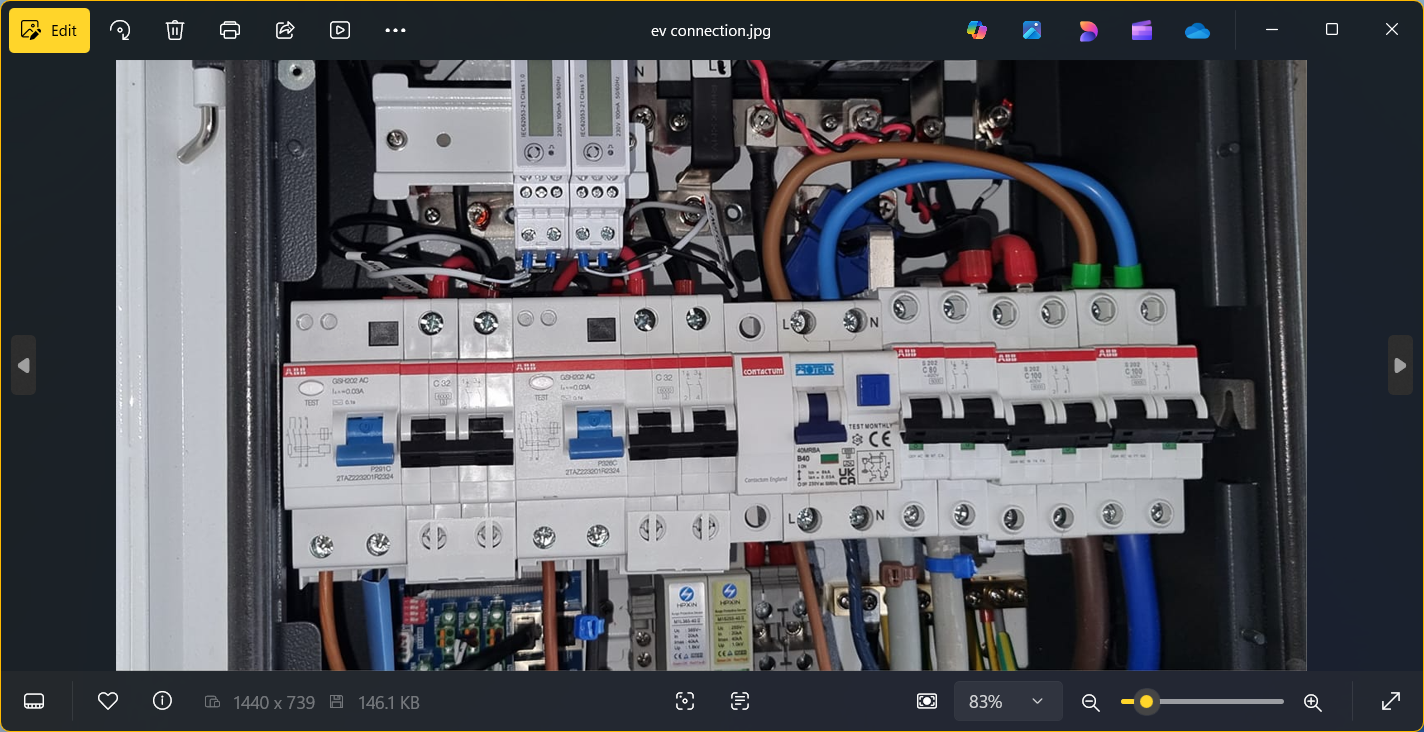
rustypole what your problem is that the CT clamps that measure the house load have been connected in such a way that they see the EV charging as house load, so the AIO discharges to meet the EV charging.

This can be fixed by your installer moving the wiring for your AIO CT clamps or your EV charger wiring. Basically the EV charger should be connected directly to the grid supply and THEN the AIO connection and CT clamps follow. This way the AIO can’t “see” the EV load.

It’s not a configuration setting, it’s a wiring problem.

The alternative is to use something like Home Assistant to control your AIO and your EV charger together, instructing your AIO to take advantage of the extra cheap IOG rates and charge when the EV is charging.

As a workaround you can unplug your car when its not needed for charging, that way you won’t get extra iGO slots

D
#4 duplada

Hi Russell,

I have a GE EV charger and Dual AIO' with Gateway. If you are on Octopus IOG then Wonder Watt have an integrated automatic solution that either holds the battery or by charging the house batteries at the same time (Link Below). This stops the depletion of the house batteries when charging your EV. It can also send automatic schedules to charge your house batteries when you receive a Bonus charging slot. I suffer from exactly the same problems that you describe. I was going to have my wiring altered to blind the Gateway to the fact the EV existed (as suggested above) but the cost was approaching £500. The Wonder Watt service costs £54 per year and their support is second to none. I highly recommend it. You could get a free trial for a week to try it out when I joined. I also know that there are some OHME charger users over there so you could ask them how they are finding things with your brand of charger.

WW is also good by the way for the Octopus free energy sessions because you can setup standard schedules that execute once and then go dormant until you need them again. As I have an export tariff with Octopus also, I have one Schedule that Exports an hours worth of battery to the grid "Octopus Free Export" that ends just before free charge period begins, and then the second schedule "Octo Free Charge" kicks in the instant the free session begins to replace exported power. Both schedules automatically go dormant after execution if setup as "One off's" but remain in your saved schedule list. All you have to do the next time that Octopus announce the next free session is alter the times if they have changed, and set the them active again. No problems forgetting to turn the schedules off again like with the GE App or Portal. I can't tell you how many times I have done that.

I hope this helps.

(https://www.wonderwatt.com/tags/#Octopus+Intelligent+Go)

C
#5 CW

Do you also have the Gatewat with the AIO?

What my installer did (I have a similar set-up GE AIO and a Zappi) was to wire the zappi to the grid side on the Gateway, that way the AIO doesn't "see" the draw for the EV. It also means that should the grid drop during a charging session, then EV charging will also stop.

D
#6 dragos.balaban

[unknown] the GE EV charger has a setting to no drain the battery if installed within a GE environment

D
#7 dragos.balaban

duplada the GE EV charger has a setting to no drain the battery if installed within a GE environment

R
#8 Rogerbu

I have IOG, Zappi & AC3.0 invertor. IOG is set for the car to be raedy by 05:30.
Car (BMW X3 Plugin hybrid) is set to only charge between 23:30 & 05:30

Even if IOG triggers a charge outside these hours, the car doesn't charge.

Easily overridden when I actually decide to charge during the day (multiple journeys > than car battery capacity etc)

I have not seen any Battery to Car charge since I set it up as above.

S
#10 SimonClarke

Rogerbu probably going against octopus asking for no other controls

D
#12 duplada

dragos.balaban No it Doesn't Let me Explain

Yes, that is how the GE EV marketing information reads, but Unfortunately with most things GE reality is somewhat different. My system is a complete GE Environment and comprises of the following a GE Gateway with EPS Dual (2x AIO's Inverter/Batteries) and GE EV Charger. I was attracted to this setup because it seemed on the face of it to have excellent features and integration. All the kit from one manufacturer must work well together right? WRONG I fell for all the marketing hype, and I did do extensive research before I purchased.

The GE EV Firmware is a joke its development is outsourced ill thought out and does DOES NOT support their flagship product that I own. GE don't tell you that they let you find out. I have had 6 months of hell with GE and their lack of support (don't get me started). Even some of the Level 3 (most knowledgeable) support personnel don't even know this fact.

Finally after 6 months I got GE Support to admit in writing that it not supported

GE quote "Currently, EV charging via “Cloud” mode isn’t formally supported on parallel AIO setups. Our developers have requests in to extend EV control logic to this configuration—ultimately by giving the Gateway virtual-battery awareness for the charger. Until that’s released, the charger will default to drawing from the batteries. I realize this is far from ideal, and I’ll keep you updated on the beta and production timelines for full cloud-mode support in parallel systems. " GE End Quote

I have been asking them every week since for a date for the new firmware / software no answer was ever forthcoming, now they don't even reply anymore. So if your reading this GE you don't need to worry anymore, I have bought a Zappi and found a good solution with Wonder Watt which can read the GE API & Octopus API's and pause the discharge from the house batteries all at the same time. It also automatically schedules IOG bonus charging slots.

My advice to anyone considering buying a GE EV charger is DONT. If you want to find out what else doesn't work or sort of works with GE EV charger then read this.

https://community-beta.givenergy.cloud/t/whats-new-after-3-years-under-the-hood/4264/14?replies_to_post_number=14

D
#13 duplada

Rogerbu Check out the Wonder Watt solution link above that works

O
#14 Ortwin

I had this happen with my EV setup and Zappi charger. Turns out the Zappi had a eco setting that would use excess solar to charge up the car rather than export it. I just turned the eco setting to zero and the limit which triggered the charge to above my solar panel output. I would give Ohme a call and make sure you have solar boost turned OFF.

O
#15 Ortwin

I had this happen with my EV setup and Zappi charger. Turns out the Zappi had a eco setting that would use excess solar to charge up the car rather than export it. I just turned the eco setting to zero and the limit which triggered the charge to above my solar panel output. I would give Ohme a call and make sure you have solar boost turned OFF.

C
#16 CW

Ortwin Just a slight aside, but you can configure the Zappi so that it never charges from solar (and charge overnight) if you have a good export rate and it makes sense to export solar rather than self consume it

A
#17 alan_johnston

rustypole Is this a known issue with OHME and GivEnergy integration

It is a problem with Ohme. It is on their FAQ. They can't handle Solar PV+Battery.
https://ohme-ev.com/support/how-do-i-charge-with-intelligent-octopus-go/

At this time, Ohme cannot distinguish between power from solar power and power from your home battery. Therefore, if your battery is set to release energy when you plug in your car, the charger might use that instead of solar energy.
To keep your battery full for when you need it, here’s what you can do:

Change the battery settings so it isn’t set to discharge while you’re charging your car.
Schedule the battery (if it has this feature) to hold onto its charge during your usual car charging times.
Switch off the battery manually when you plug in your car, and turn it back on after you unplug.
This way, you can save the stored energy for later and keep dynamically charging your car with the Intelligent Octopus Go tariff.

O
#18 Ortwin

CW
That's what we do as we get 15p per kWh for export. Overnight It cost us 7p per kWh to import for the car and to charge up our 2x 9.5Kw batteries.

D
#19 DD

[unknown] No, that's a different problem... There are two distinct (potential) problems:

1) when you want to charge the car from the grid, power comes from the battery instead
2) when you want to export solar/battery to the grid, the car steals it

[unknown] Instead of pulling power from the grid during these off-peak sessions, the EV seems to be drawing energy from my GivEnergy battery.

To be pedantic, the car is charging as directed. It doesn't know/care where the power is coming from. It's the GE system that sees an import and is choosing to discharge the battery to cover it. (Eco mode is basically "do what you can to keep import/export at 0".) So the GE is pushing power to the EV, rather than the EV pulling power from the battery. There's nothing you can change at the Ohme end to control this.

Ideally, the OHME charger should use grid power for EV charging during off-peak times, while the GivEnergy battery continues to support household loads.

Not really possible, without changing the wiring as mentioned above - the GE has no way of knowing how much of the consumption is due to the EV, and how much is due to household loads. So it can't calculate an appropriate discharge rate to cover just the latter. But if the car is charging, import is cheap, so it makes sense to fully pause the battery and let the grid cover all your usage.